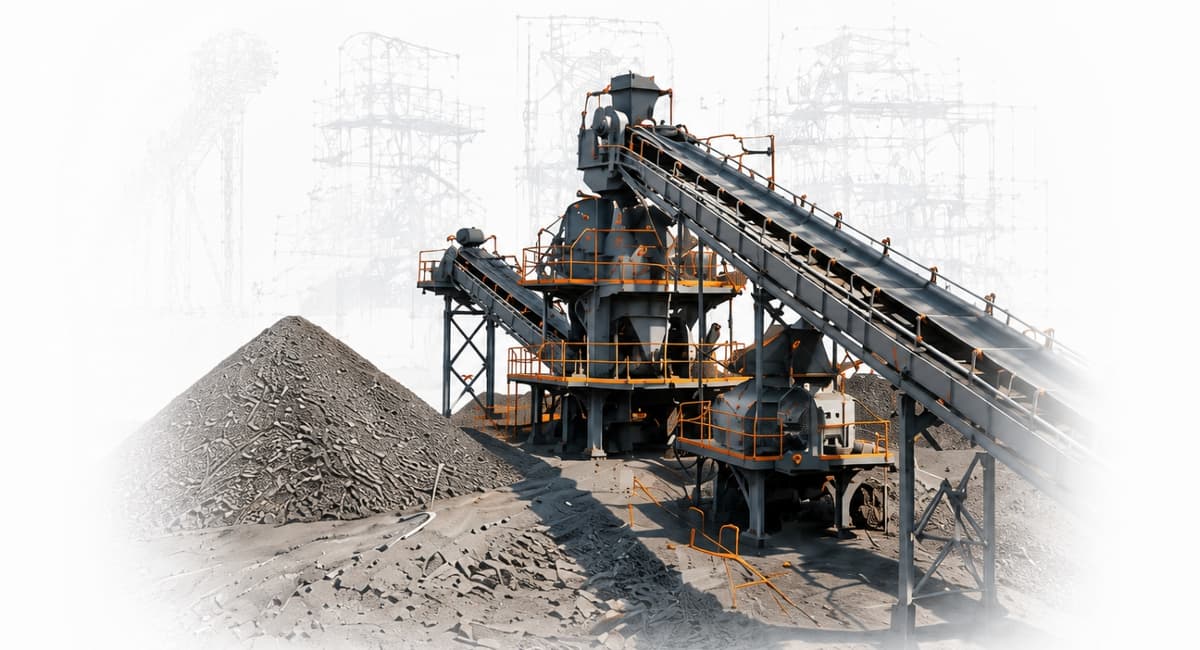
Mining is one of the oldest industries in the world but its importance has not diminished with time. In fact, as cities expand, industries grow and technology becomes more advanced, the need for minerals and raw materials continues to increase. From the steel used in buildings and bridges to the aggregates used in roads and concrete, mining provides many of the basic materials required for modern life.
When people think about mining, they often imagine large mines, excavators and trucks removing rocks from the ground. However, modern mining involves much more than extraction. The industry includes exploration, excavation, crushing, screening, mineral processing, transportation and material handling. Each stage has an important role in turning natural mineral resources into usable materials.
The importance of mining can therefore be understood by looking at its connection with construction, manufacturing, infrastructure, energy, technology and economic development.
What Is Mining?
Mining is the process of extracting valuable minerals, metals, rocks and other geological materials from the earth. These resources can be found near the surface or deep underground depending on the geological conditions of a particular area.
Mining operations are generally divided into surface mining and underground mining. Surface mining includes activities such as open-pit mining and quarrying, while underground mining involves extracting resources through tunnels and underground workings.
The type of mining method depends on factors such as the location of the deposit, depth, geology, mineral type and economic feasibility.
Once material is extracted, it often needs further processing before it can be used. Large rocks may need to be reduced in size using a stone crusher or other crushing equipment. Screening equipment can then separate the crushed material into different sizes.
This makes mining closely connected with the crushing and screening industry.
Why Is Mining Important?
The importance of mining goes far beyond the extraction of minerals. Mining provides the raw materials needed by several industries and supports a wide range of economic activities.
Here are some of the major reasons why mining is important.
1. Mining Provides Essential Mineral Resources
One of the primary reasons mining is important is that it provides access to mineral resources.
Iron ore, limestone, copper, aluminium-bearing minerals, coal, gypsum and many other resources are used in different industries. Some minerals are used as sources of metals while others are processed into construction materials or industrial products.
For example, iron ore is used in steel production, while limestone is an important raw material for cement manufacturing. Copper is widely used in electrical applications and aggregates obtained through quarrying and crushing are essential for construction projects.
Without a reliable supply of these resources, many industries would face difficulties maintaining production.
2. Mining Supports Construction and Infrastructure
Construction is one of the industries most closely connected to mining.
Roads, bridges, railways, airports, dams, residential buildings and industrial facilities require large quantities of raw materials. Crushed stone, aggregates, sand, limestone and other mineral-based materials are used in different stages of construction.
Aggregate crushing is particularly important because naturally occurring rocks often need to be processed into specific sizes before they can be used.
A typical stone crushing plant may include a primary crusher, secondary crusher, vibrating screen, conveyors and other supporting equipment. The final material can then be used for applications such as road construction, concrete production and infrastructure development.
As infrastructure projects continue to expand, the demand for reliable aggregate crushing equipment also remains important.
3. Mining Supports Manufacturing Industries
Modern manufacturing depends heavily on raw materials obtained through mining.
Steel manufacturing requires iron ore and other minerals. Aluminium production depends on mineral resources containing aluminium. Electrical equipment requires metals such as copper and aluminium. Glass, ceramics, chemicals and many other products also depend on mineral-based raw materials.
This creates a direct connection between the mining industry and manufacturing.
A disruption in the availability of important minerals can affect production costs and supply chains across several industries. Reliable mining operations therefore play an important role in keeping manufacturing industries supplied with essential materials.
4. Mining Creates Employment Opportunities
The mining industry employs many different areas.
Mining operations require engineers, geologists, equipment operators, mechanics, electricians, supervisors and other skilled professionals. However, employment opportunities are not limited to mine sites.
The industry also supports transportation companies, equipment manufacturers, maintenance services, engineering firms, construction companies and logistics providers.
Mining machinery manufacturers and suppliers also contribute to this ecosystem by designing and producing equipment such as crushers, vibrating screens, conveyor systems and material handling solutions.
As mining becomes more technology-driven, there is also increasing demand for professionals with skills in automation, equipment monitoring, maintenance and process optimisation.
5. Mining Contributes to Economic Development
Mining can contribute significantly to regional and national economic activity.
A mining project creates demand for equipment, transportation, engineering services, construction and other supporting activities. Government revenues can also be generated through taxes, royalties and other economic channels associated with mineral production.
For mineral-rich regions, mining can become an important part of local economic development.
In India, mining and mineral production support sectors such as construction, infrastructure, manufacturing, power generation and engineering. The importance of mining in India is particularly visible in the development of roads, housing, industrial facilities and other infrastructure that require large quantities of mineral-based materials.
6. Mining Supplies Materials for Energy and Technology
The relationship between mining and technology has become even more important as the world moves towards electrification and advanced energy systems.
Modern electrical infrastructure, batteries, renewable energy equipment, electronic devices and industrial technologies require a wide range of minerals and metals.
Copper, aluminium, lithium, nickel, graphite, and several other mineral resources have applications across various energy and technology-related industries.
This does not mean that every mineral is used in every technology. Different technologies require different materials. However, the broader relationship is clear: access to mineral resources is an important part of developing and maintaining modern technologies.
7. Mining Supports the Aggregate Industry
Mining and quarrying are also closely connected to the production of aggregates.
Aggregates are granular materials, such as crushed stone, gravel and other mineral-based materials, used in construction. Depending on the application, aggregates may need to meet specific requirements for size, shape, strength and cleanliness.
This is where aggregate crushing and screening equipment becomes important.
A crusher machine reduces large rocks into smaller particles, while a vibrating screen separates material according to size. Conveyors can then transport different material fractions to stockpiles or additional processing stages.
The complete process can vary depending on the type of rock, feed size, production capacity and required final product.
The Role of Crushing Equipment in Mining
Mining does not end when material is removed from the ground. In many operations, the extracted rock must be processed before it can be transported, sold or used.
Crushing is one of the most important stages in this process.
A primary crusher receives large pieces of material and reduces them to a smaller size. Secondary and tertiary crushing stages may be added when a finer product is required.
Different types of crushers are designed for different applications. Jaw crushers are commonly used for primary crushing, while cone crushers can be used for secondary and tertiary crushing applications. Vertical shaft impactors are often used when shaping or fine crushing is required for specific materials.
The right crushing machine depends on several factors, including:
Type and hardness of material
Feed size
Required output size
Production capacity
Material abrasiveness
Plant configuration
Final product requirements
Selecting equipment based on these factors can help a crushing plant operate more efficiently.
The Importance of Mining in India's Development
India has a large and diverse mineral resource base, and mining plays an important role in supporting the country's industrial and infrastructure development.
The growth of roads, railways, housing, manufacturing facilities, renewable energy projects and urban infrastructure creates continued demand for raw materials.
Construction aggregates are particularly important because large infrastructure projects require significant quantities of crushed stone and other materials.
This makes efficient stone crushing plants, aggregate crushing plants and screening systems an important part of the wider construction and mining supply chain.
At the same time, India's mining sector is becoming increasingly focused on technology, productivity, safety and efficient resource utilisation.
The Future of the Mining Industry
The mining industry is changing as technology, environmental requirements and material demand evolve.
Automation, equipment monitoring, improved process control and more efficient machinery are becoming increasingly important in modern mining operations.
Mining companies are also paying greater attention to equipment uptime and maintenance because unexpected downtime can affect production schedules and operating costs.
Crushing plants are similarly becoming more application-focused. Instead of simply selecting a crusher based on its advertised capacity, operators need to consider the complete process, including feeding, crushing, screening, conveying and final product requirements.
This approach can help create more balanced and efficient mineral processing systems.
Final Thoughts
The importance of mining can be seen in almost every part of modern development. Mining provides the mineral resources needed for construction, manufacturing, infrastructure, energy and technology. From iron ore and copper to limestone and construction aggregates, the materials extracted from the earth form the foundation of countless products and projects.
However, successful mining is not simply about extracting more material. Modern mining operations need to focus on productivity, safety, equipment reliability, resource efficiency and responsible environmental practices.
Crushing and screening are important parts of this process. The right stone crusher, jaw crusher, cone crusher, VSI crusher, vibrating screen and conveyor system can help transform extracted material into useful products for construction and industrial applications.
As demand for minerals and aggregates continues to grow, mining companies will need reliable equipment and efficient processes to meet changing requirements. Pithal Machines supports this need by providing crushing and screening solutions designed for mining, aggregates and construction applications.
With the right combination of engineering, technology and responsible resource management, the mining industry can continue to support infrastructure, manufacturing and economic development for years to come.