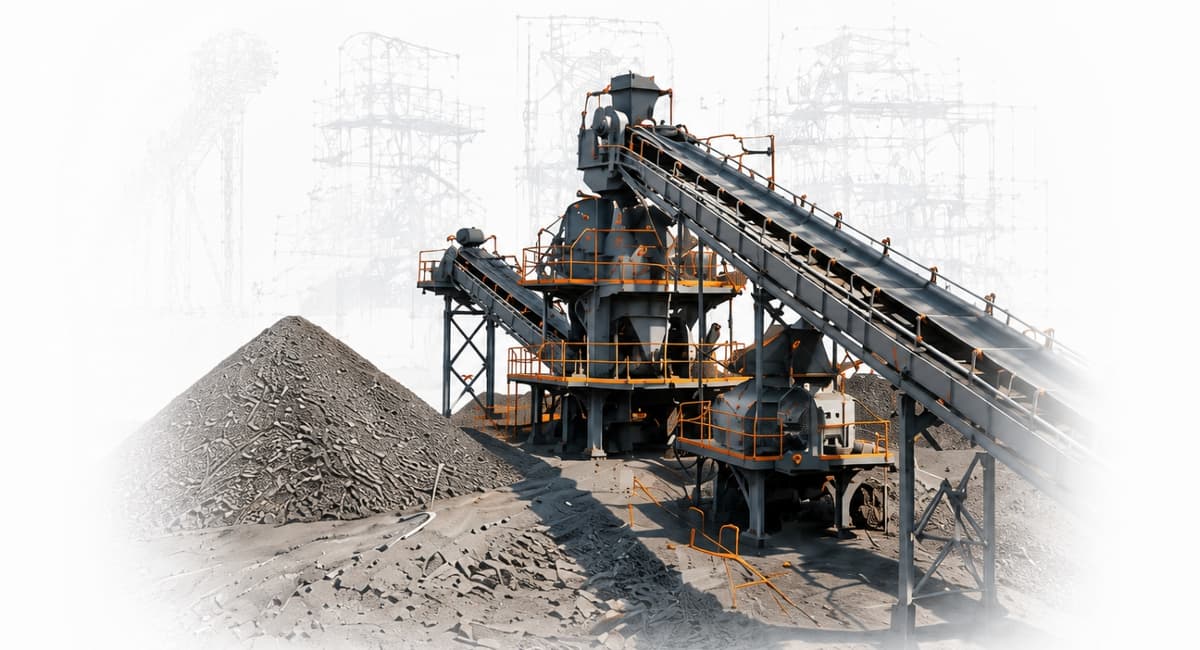
Running a crushing plant is hard work. Machines break down. Parts wear out. And every time the crusher stops, you lose time, money and production. If you work at a quarry, a recycling yard or any site with crushing and screening equipment, you already know this feeling.
The good news? Most crushing plant problems repeat themselves. Once you know what causes them, you can fix them fast and even stop them from happening again. In this article, we'll go through the most common problems in crushing plants, explain why they happen and show you simple, practical ways to solve them.
Why Do Crushing Plants Break Down So Often?
Before we look at specific problems, let's understand the main reasons crushing plants fail:
Bad feed control - feeding too much material too fast or feeding uneven material
Skipping maintenance - not checking oil, grease or wear parts on time
Wrong machine for the job - using equipment that isn't built for your material
Operator mistakes - running the crusher too fast, too hard or outside safe limits
Dust, heat and moisture - tough site conditions that wear down machines faster
Once you know these root causes, it's much easier to spot problems early and fix them before they turn into a major breakdown.
1. Crusher Jamming and Blockages
This is the number one complaint from most crushing plant operators. The crusher gets blocked and everything stops.
Why it happens: Big rocks that are too large for the crusher, metal pieces mixed in with the feed, wet or sticky material. and uneven feeding all cause jams. Jaw crushers and impact crushers jam the most when they get fed material bigger than they're built to handle.
How to fix it:
Add a grizzly feeder or vibrating feeder before the crusher to remove oversized rocks early
Use a metal detector on the conveyor to catch tramp metal before it reaches the crusher
Feed material slowly and steadily instead of dumping large loads at once
For wet or sticky material, use a scalping screen to remove moisture and fines before crushing
2. Jaw Plates and Liners Wearing Out Too Fast
Wear parts are supposed to wear out; that's normal. But if your jaw plates or liners are wearing out much faster than expected, something is wrong.
Why it happens: Hard, abrasive rock, a crusher setting that's too tight, uneven feeding and using the wrong liner material all speed up wear.
How to fix it:
Choose the right liner and jaw plate material (usually manganese steel) based on how tough your rock is
Flip or rotate jaw plates regularly so wear spreads evenly, instead of wearing out one spot
Check your crusher's closed-side setting often; too tight and it wears faster and uses more power
Make sure material is falling evenly across the crushing chamber, not piling up on one side
3. Screens Getting Blocked (Blinding and Pegging)
If your screen suddenly starts letting oversized material through or your fine material stops flowing properly, your screen is probably blinding or pegging.
Why it happens: Blinding happens when wet, sticky or fine particles get stuck in the screen and block the holes. Pegging happens when rocks wedge themselves into the screen mesh and stay stuck.
How to fix it:
Use self-cleaning screen panels made from polyurethane or rubber; they flex and shake material loose
Add ball deck cleaners under the screen to knock stuck particles free
Adjust the screen's angle and vibration based on how wet your material is
If your material is always damp, consider a heated or air-assisted screen
4. Conveyor Belts Slipping or Running Off Track
A conveyor belt running off to one side might look small but it leads to spilled material, belt damage and eventually a torn or ruined belt.
Why it happens: Idlers or pulleys that aren't lined up right, material loaded unevenly onto the belt, worn belt splices and loose or overly tight belt tension all cause this.
How to fix it:
Check and align idlers and pulleys on a regular schedule
Load material onto the center of the belt using chutes and skirting
Keep belt tension at the level the manufacturer recommends, not too loose, not too tight
Fix worn belt splices right away instead of waiting for them to fail
5. Overheating and Bearing Failure
Overheating is usually a warning sign. Ignore it and you'll end up with a burnt-out bearing and a crusher that's down for days.
Why it happens: Not enough grease or oil, dirty or contaminated lubricant, shafts that are out of alignment and running the crusher beyond its rated load all cause overheating.
How to fix it:
Follow the manufacturer's lubrication schedule and use the right grease or oil for your site
Fit dust seals and covers to keep dirt and water out of bearing housings
Check temperatures regularly with a thermal camera or sensor so you catch heat problems early
Check shaft alignment whenever you do major maintenance or replace parts
6. Crusher Producing Less Output Than Usual
If your plant's tons-per-hour output starts dropping and you're not sure why, don't worry; it's almost always fixable once you find the cause.
Why it happens: Worn-out liners, a wrong crusher setting, feed material that's the wrong size for your crusher or a bottleneck somewhere else in the plant (like a small screen or slow conveyor) can all cut your output.
How to fix it:
Check your whole plant, not just the crusher; a bottleneck downstream can make the crusher look like the problem
Adjust crusher settings regularly as liners wear down, since worn liners change your crushing gap
Use a pre-screen to sort feed size before it reaches the crusher
Track your output numbers over time so you notice a slow drop before it becomes a big one
7. Too Much Dust
Dust isn't just annoying; it's a safety issue and in many places, a legal compliance issue too.
Why it happens: Dry material, material falling from a high drop height, weak dust suppression systems and worn seals or covers all create excess dust.
How to fix it:
Add water spray or fogging systems at key points where material is crushed or transferred
Lower the drop height at conveyor transfer points using better-designed chutes
Seal off dusty areas with rubber skirting and covers
Maintain your dust suppression system itself; a clogged spray nozzle won't help anyone
Building a Simple Maintenance Routine
Fixing problems as they happen is important. But preventing them in the first place saves you far more time and money. A good maintenance routine should include:
Daily - a quick visual check of the crusher, screens and conveyors before startup
Weekly - checking lubrication levels, belt tension and wear part thickness
Monthly - a deeper look at bearings, liners and structural parts
Ongoing - keeping a simple log of part replacements and wear rates, so you can predict problems before they happen
Plants that stick to a maintenance routine like this have fewer surprise breakdowns, longer-lasting equipment and lower overall running costs.
Final Thoughts
Crushing plant problems jamming, worn parts, blocked screens, misaligned belts, overheating, low output or excessive dust- almost always have a clear, fixable cause. Once you understand why these problems happen, fixing them and preventing them becomes much easier.
Whether you're troubleshooting equipment you already own or choosing new crushers and screens for your plant, selecting the right equipment for your material and following a simple, consistent maintenance routine is the best way to keep your crushing plant running smoothly, day after day.
At Pithal Machines, we provide crushing and screening equipment designed for mining, quarrying, aggregates and construction applications. From jaw crushers and cone crushers to vibrating screens and complete crushing plants, choosing the right equipment can help improve material processing efficiency and support reliable plant performance.
Explore Pithal Machines today to find the right crushing and screening solutions for your application.