
40 - 1000TPH Capacity
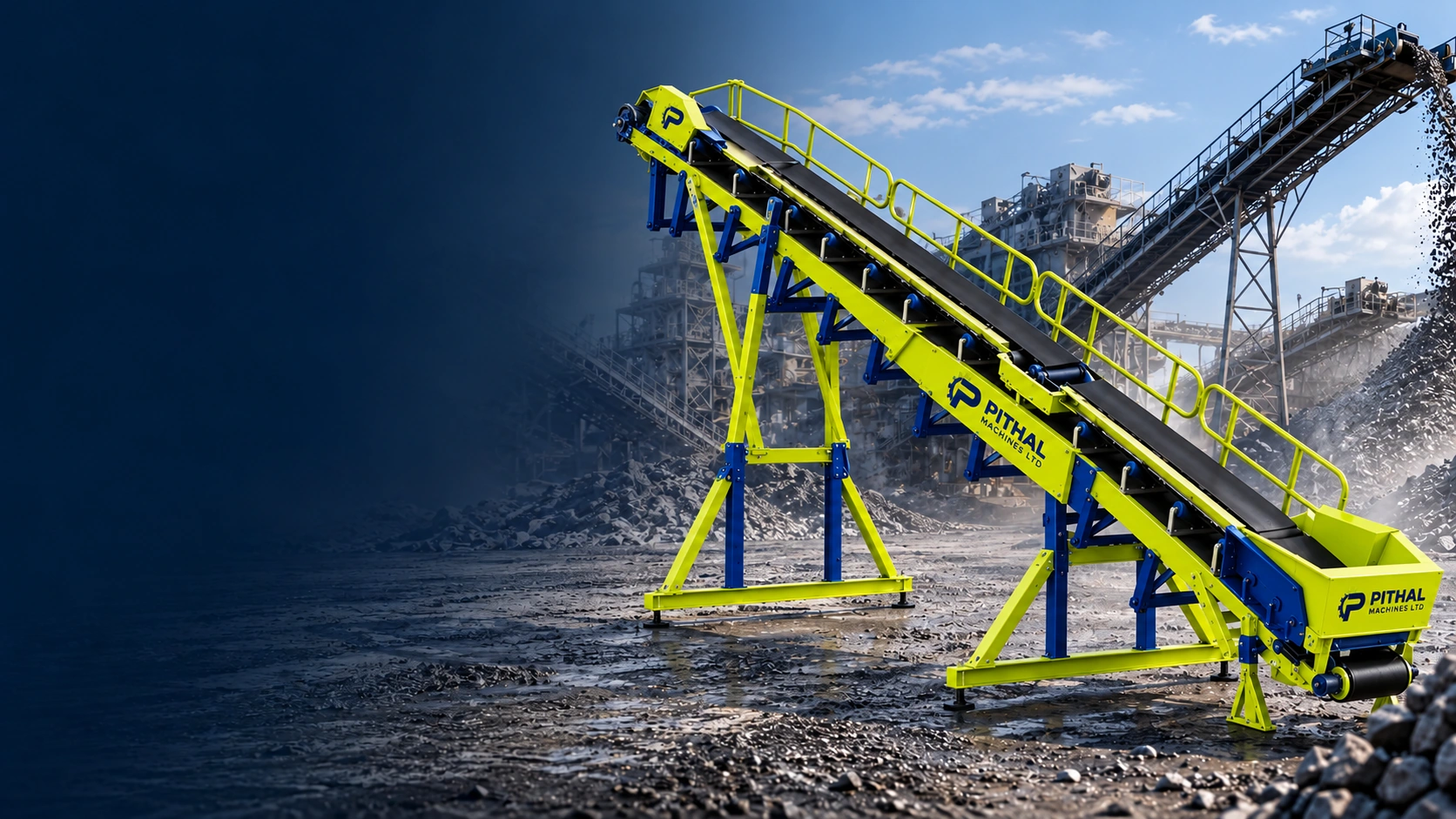
PRIME CONVEYOR SYSTEM
BUILT FOR CONTINUOUS FLOW. ENGINEERED FOR RELIABILITY.
Prime Conveyor System is engineered for efficient material transport, delivering reliable performance and continuous material handling in demanding mining, quarrying and aggregate applications.
Up to 700MM Lump Size
3 - 60HP Motor Power
Transfer / StockpileApplication
PRIME CONVEYOR SYSTEMPERFORMANCE AND KEY TECHNICAL DETAILS
Discover the engineering and technical details behind efficient material handling, continuous flow and reliable performance.
Capacity
40 - 1000
TPH
Material transfer capability
Feed Lump Size
Up to 700
MM
Designed for demanding material flow
Motor Power
3 - 60
HP
High-efficiency drive motor options
Belt Width
500 - 1400
MM
Multi-ply heavy-duty rubber belt
Application
Transfer / Stockpile
Bulk material transportation
Built for Performance. Engineered for Results.
PRIME CONVEYOR SYSTEMPRODUCT OVERVIEW
Prime Conveyor System is designed to deliver efficient and continuous transportation of bulk materials. Built for demanding applications, this conveyor system supports reliable material movement across mining, quarrying, aggregate production, construction and material-processing operations.
Stable Transfer
Reliable movement between plant stages
Custom Lengths
Configured to match site layout and stockpile needs
Robust Frame
Heavy-duty structure for continuous operation
Efficient Drive
Optimized motor and pulley systems reduce power waste
Applications
Configured for reliable performance across demanding industrial applications.
Aggregates
Mining
Construction
Cement
Infrastructure


Head Pulley & Drive
High-torque head pulley for steady material discharge
Safety Handrails
Full-length walkway and safety railings for operator protection
Support Idlers
Precision-balanced idler rollers ensure smooth belt travel
Truss Structure
Robust structural steel truss supports long spans without sagging
Feed Receiving Boot
Impact-absorbing feed hopper guides material onto the belt
Durable Belt
Heavy-duty multi-ply rubber belt engineered for abrasive materials
Key Features of Prime Conveyor System
Engineered for efficient and reliable material handling, the Prime Conveyor System combines robust construction with dependable performance for demanding industrial applications.
High Crushing Ratio
Optimized chamber design ensures maximum reduction ratio for higher output.
Low Maintenance
Easy access design and fewer moving parts reduce maintenance time and cost.
Heavy Duty Build
Rugged construction with premium materials for longer service life.
Fuel Efficiency
Engineered for optimal power utilization and lower operating costs.
Wear Resistant Parts
High quality manganese steel components for maximum durability.
PRIME CONVEYOR SYSTEM TECHNICAL DATA
Explore the technical details behind the Prime Conveyor System’s material-handling capacity, operating requirements and reliability.
Model | Belt Width (mm) | Conveyor Length (m) | Capacity (TPH)* | Belt Speed (m/s) | Max. Lump Size | Motor Power | Idler Size | Approx. Weight |
|---|---|---|---|---|---|---|---|---|
| PCS-500 | 500 mm | 5–25 m | 40–100 TPH | 1.0–1.6 m/s | 150 mm | 3–7.5 HP | 89 mm | 0.8–2.0 Ton |
| PCS-650 | 650 mm | 5–30 m | 80–180 TPH | 1.0–1.8 m/s | 250 mm | 5–10 HP | 89/108 mm | 1.2–3.0 Ton |
| PCS-800 | 800 mm | 5–35 m | 150–300 TPH | 1.2–2.0 m/s | 350 mm | 10–20 HP | 108 mm | 2.0–4.5 Ton |
| PCS-1000 | 1000 mm | 5–40 m | 250–500 TPH | 1.2–2.5 m/s | 450 mm | 15–30 HP | 108/133 mm | 3.5–6.5 Ton |
| PCS-1200 | 1200 mm | 10–50 m | 400–700 TPH | 1.5–2.8 m/s | 600 mm | 25–40 HP | 133 mm | 5.0–8.5 Ton |
| PCS-1400 | 1400 mm | 10–60 m | 600–1000 TPH | 1.5–3.2 m/s | 700 mm | 40–60 HP | 133/159 mm | 7.0–12 Ton |
*Capacities vary depending on material bulk density, lump size, belt speed, and conveyor inclination.
PRIME CONVEYOR SYSTEM APPLICATIONS
Engineered for efficient material transportation across mining, quarrying, aggregate production, construction and material-processing applications.


One Solution. Multiple Applications. Maximum Results.
Engineered to perform. Built to last.
PRIME CONVEYOR SYSTEM WORKING PROCESS
A continuous material-handling process designed to transport bulk materials efficiently and deliver consistent material flow with reliable performance.
Loading...
01
Material Input
Raw material is loaded into the hopper by dump trucks or loaders.
Loading...
02
Feed Hopper
Feeder hopper regulates the continuous and uniform flow of materials.
Loading...
03
Primary Crushing
Jaw crusher reduces large rocks into smaller, manageable sizes.
Loading...
04
Secondary Crushing
Further size reduction using cone crusher for consistent output.
Loading...
05
Screening
Vibrating screens separate material into different sizes.
Loading...
06
Conveyor Belt
Carries materials to the desired location.
Loading...
07
Final Output
High-quality aggregates ready for various applications.
PROCESS FLOW
SEE PERFORMANCE.
IN ACTION.
Watch how Pithal Prime Conveyor Systems deliver stable performance, high uptime, and reliable output in demanding plant conditions.
Reliable Material Flow
Keeps crushers and screens supplied with steady transfer.
Custom Layouts
Designed for plant geometry, elevation, and discharge points.
Heavy-Duty Structure
Strong frames and supports withstand site conditions.
Low Maintenance
Accessible rollers and drives support quick inspection.
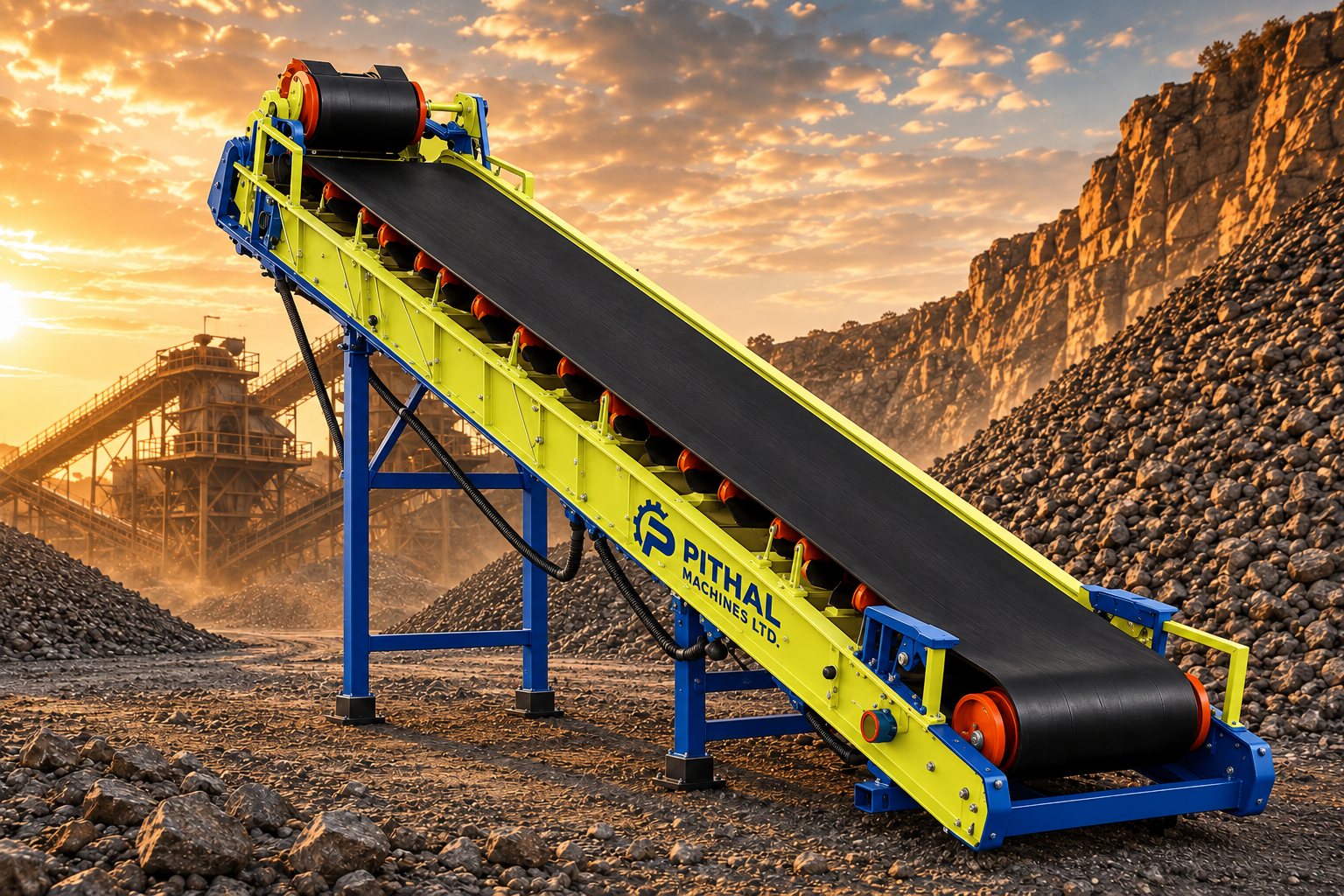
0:00 / 1:45
FULL MACHINE DEMONSTRATION
Explore every detail of our conveyor system performance.
EXPLORE OURCRUSHING EQUIPMENT
Explore Pithal Machines’ range of reliable crushing, screening and conveying solutions engineered to meet diverse material-processing requirements and demanding industrial applications.

Prime Jaw Crushers
Robust and reliable crushers built for high capacity and maximum efficiency.
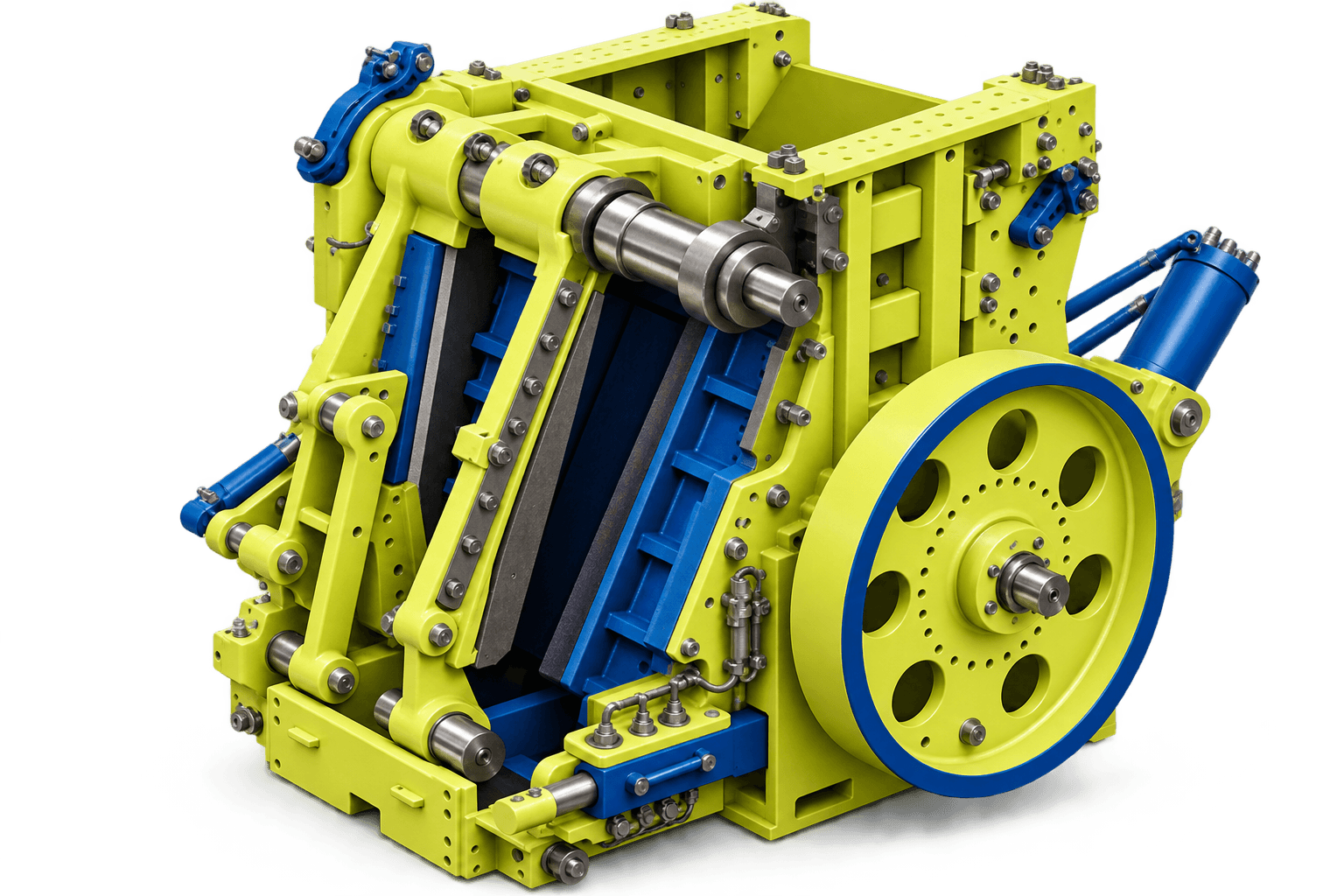
Prime UltraRock
Advanced crushing technology for extreme durability and performance.

Prime Bucket Crusher
Heavy-duty bucket systems for high-capacity material handling.

Prime Cone Crushers
High efficiency screening equipment for accurate separation and productivity.

Prime VSI Crushers
High efficiency screening equipment for accurate separation and productivity.

Prime Vibrating Screens
Strong and consistent feeding solutions for smooth and uninterrupted operations.
Prime Conveyor Systems
Strong and consistent feeding solutions for smooth and uninterrupted operations.

Prime Complete Plants
Custom-built complete crushing plants tailored to your specific needs and applications.

Prime M-Sand Crusher Plant
Integrated manufactured sand plants engineered for consistent quality and high productivity.
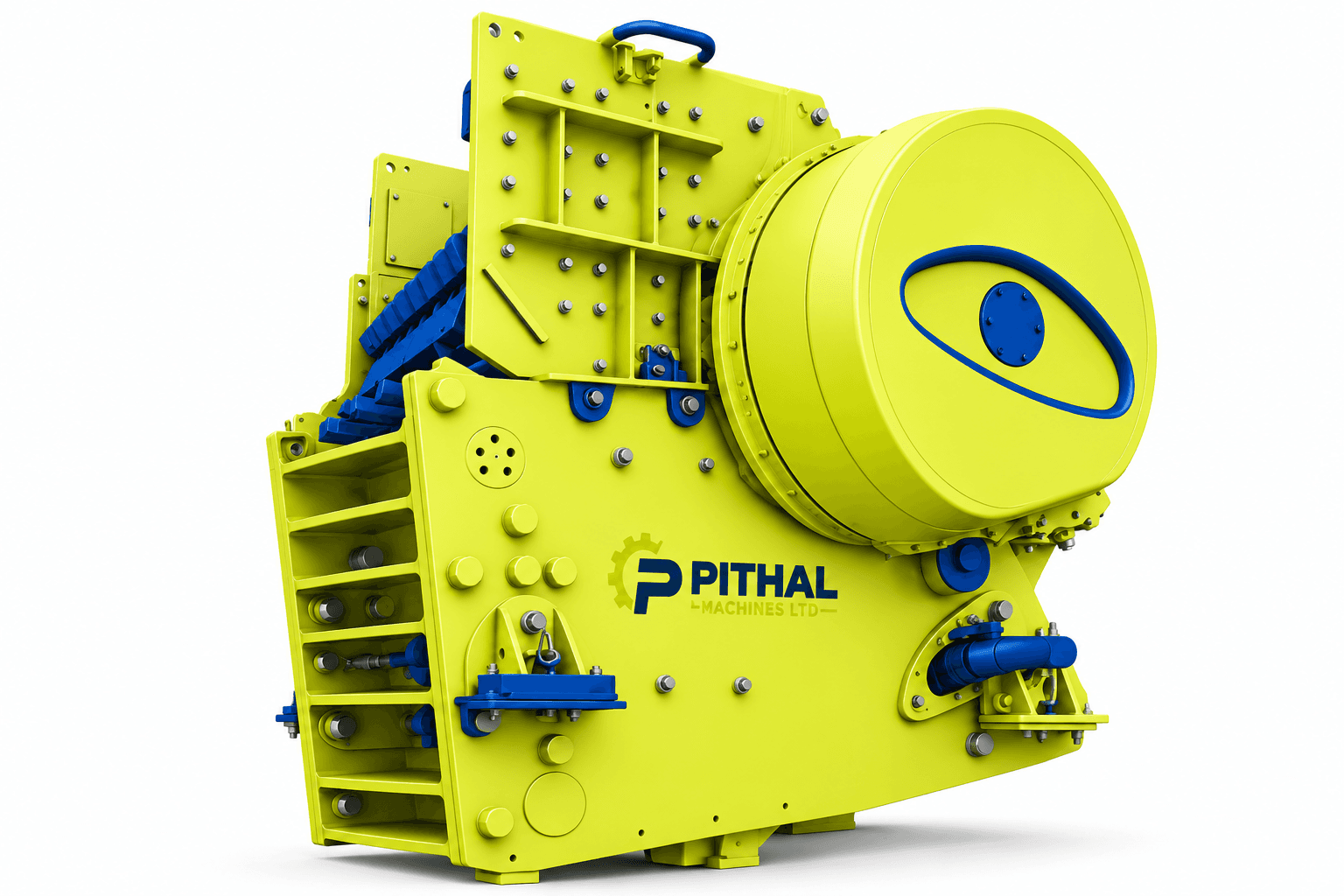
Prime Crusher Machine
Powerful crushing solutions built for high performance, durability and maximum output.
Prime Jaw Crushers
Robust and reliable crushers built for high capacity and maximum efficiency.
Prime UltraRock
Advanced crushing technology for extreme durability and performance.
Prime Bucket Crusher
Heavy-duty bucket systems for high-capacity material handling.
Prime Cone Crushers
High efficiency screening equipment for accurate separation and productivity.
Prime VSI Crushers
High efficiency screening equipment for accurate separation and productivity.
Prime Vibrating Screens
Strong and consistent feeding solutions for smooth and uninterrupted operations.
Prime Conveyor Systems
Strong and consistent feeding solutions for smooth and uninterrupted operations.
Prime Complete Plants
Custom-built complete crushing plants tailored to your specific needs and applications.
Prime M-Sand Crusher Plant
Integrated manufactured sand plants engineered for consistent quality and high productivity.
Prime Crusher Machine
Powerful crushing solutions built for high performance, durability and maximum output.
LET'S BUILD THE RIGHT SOLUTION FOR YOU.
Share your material transfer requirement and our technical team will help you select the right Conveyor System configuration based on length, belt width, capacity, and plant geometry.
MODEL SELECTION SUPPORT
Choose the right belt width and drive for your throughput.
PLANT LAYOUT GUIDANCE
Plan conveyor path, inclination angle, and stockpile zones.
CAPACITY PLANNING
Match transfer targets with crusher and screen outputs.
AFTER-SALES SUPPORT
Get rollers, belts, pulleys, and technical assistance.
Need immediate assistance?
Talk to our crushing experts today.
Call Us Now+91 98875 37129

Request a quote
REQUEST EXPERT CONSULTATION
Fill in your requirements and we'll get back to you with the best solution.
Prime Conveyor SystemDownloads
Access product brochures, technical specifications and detailed documentation to explore the Prime Conveyor System’s features, capabilities, applications and operating requirements.

CONVEYOR SYSTEM BROCHURE
Overview of belt conveyor models, configurations, and applications.

TECHNICAL DATASHEET
Belt widths, idler dimensions, drive power, and capacity ranges.

INSTALLATION GUIDE
Truss erection, belt tracking, and tensioning setup procedures.

MAINTENANCE MANUAL
Belt splicing, idler roller greasing, and maintenance guidance.
TECHNICAL SUPPORT
Expert help for conveyor sizing and plant routing.
INSTALLATION ASSISTANCE
Guidance for truss assembly, tracking, and alignment.
SPARE PARTS SUPPORT
Support for idlers, pulleys, belt cleaners, and motors.
WARRANTY SUPPORT
Reliable assistance throughout equipment lifecycle.
CAN'T FIND WHAT YOU'RE LOOKING FOR?
Contact our team for customized documents or additional information.
Frequently AskedQuestions
A conveyor system transports materials between different locations. In crushing plants, it commonly moves stones, sand and aggregates between crushers, screens and stockpiles.
Belt conveyors are widely used because they can transport bulk materials between different processing stages. The suitable arrangement depends on material characteristics, capacity and plant layout.
Capacity depends on belt width, belt speed, material density and the amount of material carried on the belt. Inclination and loading conditions also influence performance.
Buyers should provide material type, required capacity in TPH, conveyor length, height difference, loading and discharge locations and site layout.
Belt dimensions, construction, capacity, motor specifications, conveyor configuration and installation requirements influence the overall price.
Yes. Conveyors commonly connect jaw crushers, cone crushers, VSI crushers and vibrating screens. Their layout should match the required material flow and plant configuration.
Conveyor System Manufacturer in India – Pithal Machines
In a crushing and screening plant, moving materials efficiently is just as important as processing them. Raw stones need to reach crushers, crushed material must move towards screening units and finished aggregates have to be transferred to storage areas. Poor material handling can slow down production, increase manual work and create unnecessary operating costs.
A reliable conveyor system helps maintain a continuous flow of materials between different processing stages. It connects machines, reduces manual handling and supports smoother plant operations. For industries involved in mining, quarrying, construction and aggregate production, selecting the right conveying equipment is essential for efficient material movement.
Pithal Machines caters to the requirements of the crushing and screening industry. Understanding material characteristics, required capacity and plant layout helps businesses identify suitable conveying arrangements for their operations.
What Is a Conveyor System?
A conveyor system is a mechanical arrangement used to transport materials from one location to another. It commonly handles bulk materials such as stones, sand, minerals and aggregates.
In a crushing plant, conveyors connect equipment such as crushers, vibrating screens and stockpiles. For example, material discharged from a jaw crusher can be transferred to a screening unit through a belt conveyor. After screening, different aggregate sizes can be transported to separate storage areas.
The system generally includes a moving belt, motor, gearbox, pulleys, rollers and supporting structure. Its design depends on material type, transportation distance, required capacity and site conditions.
Types of Conveyor Systems
Different conveyor arrangements are used according to the material being transported and the plant layout.
1. Belt Conveyor
A belt conveyor uses a continuous moving belt supported by rollers and driven by a motorised pulley arrangement. It is widely used for transporting stones, aggregates and other bulk materials.
In crushing and screening plants, it connects crushers, screens and stockpiles. Belt width, speed and construction should match the material's weight, size and abrasiveness to support reliable operation.
2. Inclined Belt Conveyor
An inclined belt conveyor moves materials between different elevations. It is useful when machines or stockpiles are positioned at different heights.
The inclination, belt surface and material characteristics must be considered during selection. An unsuitable angle can cause material to slip or spill during transportation.
3. Horizontal Belt Conveyor
A horizontal conveyor moves materials along a relatively level path. It is commonly used to connect processing machines or transfer finished aggregates towards storage areas.
Its length and capacity should be planned according to the plant layout and expected material flow.
4. Radial Stacker Conveyor
A radial stacker conveyor distributes bulk materials across a stockpile area. Its movement around a pivot point allows material to be deposited over a wider space.
It is useful in aggregate processing facilities where organised stockpile management is important.
Important Components of a Conveyor Machine
Each component contributes to the performance and reliability of a conveyor machine.
- Conveyor Belt: The belt carries material from the loading point to the discharge location. Its construction should suit the material's size, weight and abrasive properties.
- Drive Unit: The drive unit provides the power needed to move the belt. It generally includes a motor and gearbox. Selection depends on the load, belt speed, conveyor length and operating conditions.
- Pulleys: Drive and tail pulleys guide belt movement. Correct alignment helps maintain smooth operation and reduces unnecessary belt wear.
- Idlers and Rollers: Idlers support the belt and the material being transported. Damaged or seized rollers can increase friction and affect belt tracking.
- Supporting Structure: The conveyor frame supports the belt, rollers, pulleys and drive components. It should be suitable for the expected operating load and installation environment.
- Loading and Discharge Arrangements: Loading points guide material onto the belt, while discharge arrangements control where it leaves the conveyor. Properly designed transfer points help reduce spillage and material buildup.
Benefits of Choosing the Right Conveyor System
A properly planned conveyor arrangement can improve material handling and support efficient plant operations.
- Continuous material movement: Conveyors transport materials between machines and help maintain a steady flow through different processing stages.
- Reduced manual handling: They reduce the need to move heavy stones and aggregates manually, allowing workers to focus on other plant activities.
- Improved productivity: A suitable conveying arrangement helps prevent material accumulation and delays between processing stages.
- Better material management: Conveyors can direct different aggregate sizes towards designated stockpiles or processing units.
- Flexible plant layout: Horizontal and inclined arrangements can connect equipment installed at different locations and elevations.
- Safer operations: Reducing unnecessary manual movement can help improve workplace safety. Suitable guards, emergency stops and safe access arrangements are still essential.
How to Select the Right Conveyor Belt
Selecting the right conveyor belt requires an understanding of the actual working conditions.
- Material characteristics: Consider material size, weight, moisture and abrasiveness. Sharp stones and heavy aggregates can cause greater belt wear.
- Required capacity: Estimate the quantity of material to be transported per hour, generally measured in tonnes per hour (TPH). Belt width, speed and material density influence capacity.
- Conveyor length and inclination: Measure the distance and height difference between loading and discharge points. Inclined conveyors require suitable belt grip to prevent material from slipping.
- Loading conditions: Material should be distributed properly across the belt. Uneven loading can cause spillage, misalignment and premature wear.
- Operating environment: Dust, moisture and temperature can affect belt and component performance. Select equipment suitable for the plant's working conditions.
- Maintenance access: Ensure that rollers, pulleys, belt joints and drive components can be inspected and serviced conveniently.
What Factors Determine Conveyor Belt Price?
The conveyor belt price depends on equipment specifications and project requirements. Important cost factors include:
- Belt dimensions: Width and length influence the quantity of belt material required.
- Belt quality: Construction, thickness and wear resistance affect selection and cost.
- Capacity: Higher material-handling requirements may need different belt and drive specifications.
- Motor and gearbox: Drive requirements depend on load, speed, distance and elevation.
- Conveyor configuration: Horizontal, inclined and specialised arrangements have different design requirements.
- Supporting structure: Frame dimensions, installation height and site conditions influence the overall cost.
- Additional components: Chutes, guards and discharge arrangements may add to the quotation.
For an accurate quotation, buyers should share the material type, required capacity, conveyor length, height difference, loading and discharge points and site layout. This helps the manufacturer understand the application and recommend a suitable arrangement.
How to Choose the Right Conveyor System Manufacturer
Choosing the right conveyor manufacturer is important for long-term equipment performance. The proposed system should match the material-handling requirements of the plant rather than being selected on price alone.
Check the manufacturer's experience with industrial material handling and crushing and screening applications. Discuss the material type, required capacity, belt dimensions, transportation distance and plant layout.
It is also important to understand the quality of the belt, pulleys, rollers, drive unit and supporting structure. Ask for clear technical specifications and check what is included in the quotation. Maintenance guidance, replacement components and service support should also be considered.
An experienced conveyor belt manufacturer should be able to explain belt selection and its suitability for the application. Similarly, a capable conveyor system manufacturer should understand how material movement connects with the overall plant arrangement.
Pithal Machines works in the crushing and screening equipment segment, where efficient material transfer is an important part of plant operations. Businesses planning a new installation or upgrading an existing facility can contact the team to discuss their project requirements.
Applications of Conveyor Systems
- Mining and Quarrying: Conveyors transport extracted rocks and minerals between crushing, screening and storage areas.
- Crushing and Screening Plants: They connect jaw crushers, cone crushers, VSI crushers and vibrating screens, helping move raw materials and processed aggregates between different stages.
- Construction and Infrastructure: Conveyor systems support the movement of sand, crushed stones and aggregates used in construction and infrastructure projects.
- Cement and Building Materials: They transport bulk materials between storage, handling and processing areas in cement and building-material facilities.
- Aggregate Processing: Conveyors help move screened aggregates towards separate stockpiles according to their size and intended application.
Conveyor System Maintenance Tips
Regular inspection helps maintain conveyor performance and identify problems before they cause major interruptions.
- Inspect the belt: Check for cuts, cracks, tears and unusual wear.
- Check alignment: Belt misalignment can cause edge damage and material spillage.
- Examine rollers: Replace damaged or seized rollers to prevent additional friction.
- Monitor the drive unit: Check for unusual noise, vibration or overheating.
- Clean transfer points: Remove material buildup around loading and discharge areas.
- Inspect safety devices: Check guards and emergency stops regularly.
- Maintain service records: Record inspections, repairs and component replacements.
Maintenance should be carried out by trained personnel using appropriate safety procedures and following the manufacturer's recommendations.
Contact Pithal Machines to discuss your conveyor system requirements and request a quotation for your crushing and screening plant.