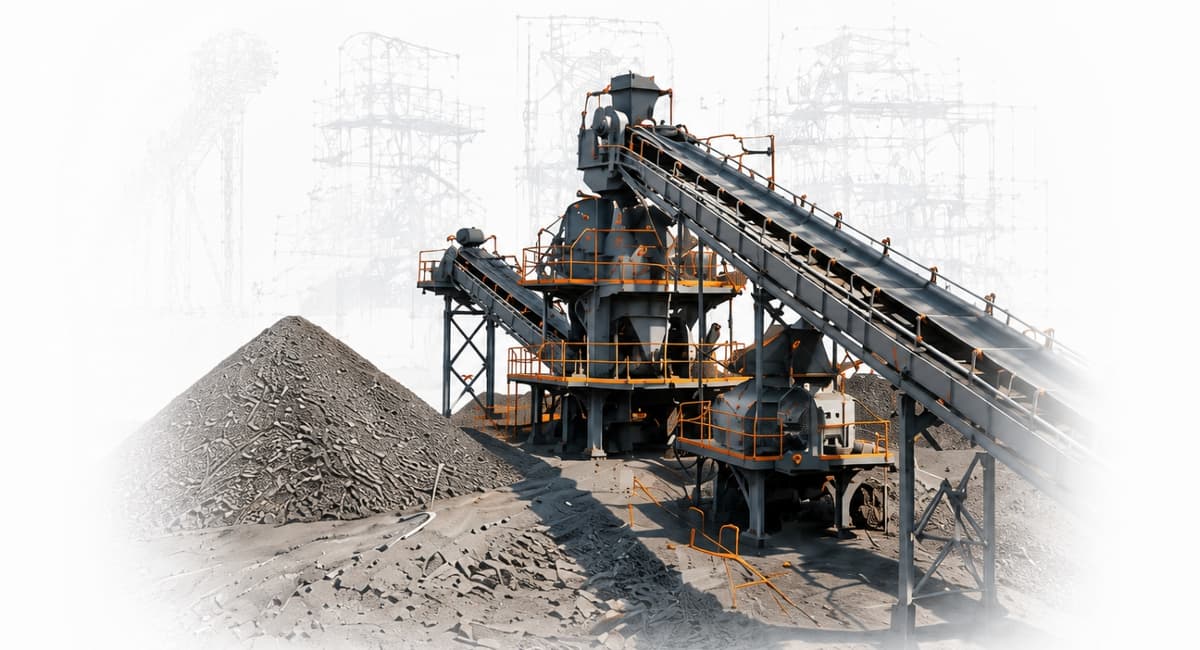
A crushing plant is a complete material-processing system designed to reduce large rocks, stones, minerals and other bulk materials into smaller, controlled sizes. Instead of relying on a single crusher, a crushing plant combines equipment such as feeders, crushers, vibrating screens, conveyors, hoppers and control systems to move material through different stages of processing.
Crushing plants are widely used in quarrying, mining, construction, road development, aggregate production and recycling. Depending on the material and the required output, a plant may use one or several stages of crushing and screening to produce consistent aggregate sizes.
A well-designed crushing plant is not simply a collection of machines. Each component needs to work together so that material flows efficiently from feeding and crushing to screening and stockpiling. Understanding the components, operating processes, types and applications of a crushing plant is therefore important when selecting equipment for a specific operation.
What Is a Crushing Plant?
A crushing plant is an integrated arrangement of machines used to feed, crush, screen, separate, convey and stockpile material.
The process usually begins with large raw material entering a hopper or feeder. A primary crusher reduces the material to a smaller size. Depending on the required product, the material may then pass through secondary or tertiary crushing. Vibrating screens separate the material according to size, while conveyors transfer it between processing stages.
A simple crushing plant process can be represented as:
Raw Material → Feeder → Primary Crusher → Secondary Crusher → Vibrating Screen → Finished Products
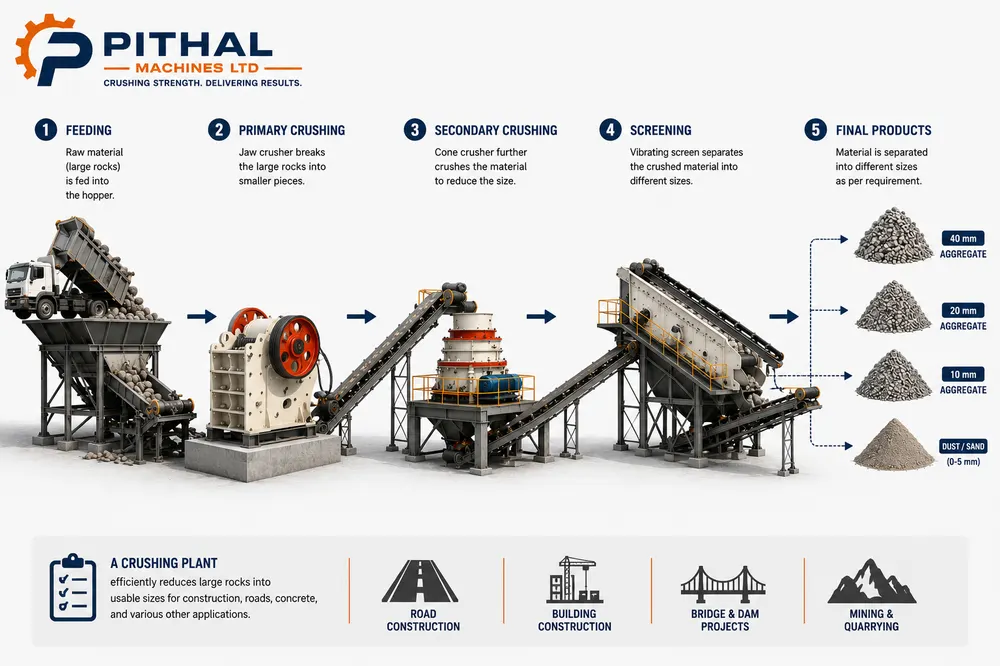
If some material is still larger than the required size, it can be returned to the crusher for further processing. This is commonly referred to as a closed-circuit crushing plant.
The final configuration depends on factors such as feed material, maximum feed size, desired product size, production capacity and the number of aggregate sizes required.
How Does a Crushing Plant Work?
The working of a crushing plant involves several connected stages. Although the exact arrangement can vary, the basic process remains focused on controlled material flow and progressive size reduction.
Feeding the Raw Material
The process starts when raw material is loaded into a hopper or feed bin. A vibrating feeder regulates the amount of material entering the crusher.
Consistent feeding is important because crushers perform best when material enters at a controlled rate. Irregular feeding can cause fluctuations in production and may reduce the efficiency of the overall plant.
The feeder can also help separate unwanted fine material before it reaches the primary crusher, depending on the plant configuration.
Primary Crushing
Primary crushing is the first major size-reduction stage. Large rocks or mined material are reduced into smaller pieces that can be processed by downstream equipment.
A jaw crusher is commonly used for primary crushing because it can handle large feed sizes and hard materials. It operates by compressing material between a fixed jaw and a moving jaw. As the moving jaw closes against the fixed jaw, the material breaks into smaller pieces.
For applications requiring dependable primary size reduction, equipment such as Pithal Machine's Prime Jaw Crusher can be incorporated into an appropriate crushing circuit.
Secondary Crushing
After primary crushing, the material may enter a secondary crusher for additional size reduction.
A cone crusher is commonly used for secondary and tertiary crushing, particularly in hard-rock and aggregate applications. It reduces material through compression between the mantle and concave, producing a more controlled product size.
The choice of secondary crusher depends on the material characteristics, feed size, required reduction, and final product specifications. Pithal Machine's Prime Cone Crusher is designed for crushing applications where controlled secondary or further-stage size reduction is required.
Screening and Separation
Once the material has been crushed, it is passed through a vibrating screen. Screening separates particles according to size.
Material that meets the required specification can move toward stockpiling, while oversized material may be returned to the crusher for additional reduction.
This process is particularly important in an aggregate crushing plant, where several finished sizes may need to be produced from the same raw material.
Conveying and Stockpiling
Conveyor systems transport material between crushers, screens and stockpiles. They help maintain continuous material flow and reduce unnecessary handling.
Once the material reaches the required size, it can be transported to separate stockpiles according to its grade or application. Efficient conveyor arrangement is important because a bottleneck in material handling can affect the performance of the entire crushing and screening plant.
Main Components of a Crushing Plant
A crushing plant consists of several interconnected components. The exact equipment depends on the plant's capacity, material, configuration, and final product requirements.
Crushers
Crushers are the primary size-reduction machines in a crushing plant.
Different crusher types are used for different stages. Jaw crushers are commonly used for primary crushing, while cone crushers are often used for secondary and tertiary applications. Impact crushers and vertical shaft impactors may also be selected when specific crushing or shaping requirements exist.
Crusher selection should consider material hardness, abrasiveness, feed size, required reduction ratio, capacity and desired product characteristics.
Vibrating Feeders
A vibrating feeder controls the flow of material from the hopper into the crushing equipment.
It helps maintain a steady feed and can improve the consistency of the crushing process. In some configurations, the feeder also helps remove smaller unwanted material before primary crushing.
Vibrating Screens
Vibrating screens separate crushed material into different size fractions.
For example, an aggregate plant may need to produce several sizes of stone for concrete, road construction, asphalt or drainage applications. The screen separates these sizes so they can be directed to the appropriate stockpile.
Screen capacity should be properly matched with the crusher output. If screening capacity is insufficient, it can become a bottleneck in the plant.
Conveyor Systems
Conveyors move material from one stage to another. They can transport material from the primary crusher to the secondary crusher, from the crusher to the screen and from the screen to finished-product stockpiles.
Proper conveyor layout helps maintain continuous material flow and reduces the need for additional material handling.
Hoppers and Feed Bins
Hoppers and feed bins receive and temporarily hold raw material before it enters the crushing circuit.
They provide a buffer between material loading and processing, helping maintain a more consistent supply to the feeder and crusher.
Control Systems
Control systems allow operators to monitor and manage plant operations. Depending on the equipment and level of automation, operators may monitor material flow, crusher operation, screen performance and other operating conditions.
Modern monitoring and control systems can help improve consistency and identify operating issues before they lead to unnecessary downtime.
Auxiliary Equipment
A crushing plant may also include supporting equipment such as dust-suppression systems, electrical and power systems, magnetic separators, stockpiling equipment, and other site-specific components.
Not every plant requires the same auxiliary equipment. The final selection depends on the material being processed and the environmental, operational, and product requirements of the project.
Types of Crushing Plants
Crushing plants can be classified according to their mobility as well as their crushing-stage configuration.
Stationary Crushing Plant
A stationary crushing plant is installed at a fixed location and is generally used for long-term operations.
It is commonly found in large quarries, mining sites and aggregate-production facilities where high production capacity and continuous processing are required.
Because the equipment remains in one location, stationary plants can be configured around a specific material flow and production requirement.
Mobile Crushing Plant
A mobile crushing plant is designed to move between locations. Crushing equipment is mounted on a mobile platform, allowing processing to take place closer to where material is extracted or used.
Mobile crushing plants can be useful for construction, road projects, demolition and operations where the processing location changes over time.
Single-Stage Crushing Plant
A single-stage plant uses one main crushing stage to reduce material to the required size.
This configuration may be suitable when the feed material and required final product do not require extensive size reduction or multiple processing stages.
Two-Stage Crushing Plant
A two-stage crushing plant uses two crushing stages, commonly primary and secondary crushing.
For example:
Raw Material → Jaw Crusher → Cone Crusher → Screen → Finished Product
This type of configuration is widely used when large feed material needs to be progressively reduced to a smaller aggregate size.
Three-Stage Crushing Plant
A three-stage crushing plant uses primary, secondary, and tertiary crushing.
It can be selected when the required final product is significantly smaller than the original feed or when a more controlled particle size distribution is required.
Closed-Circuit Crushing Plant
In a closed-circuit configuration, crushed material passes through a screen and oversized particles are returned to the crusher for further reduction.
The simplified process is:
Crusher → Screen → Correct-Size Material
Oversized Material → Return to Crusher → Screen Again
This arrangement helps control the final product size and can be useful where consistent aggregate specifications are important.
Applications of Crushing Plants
Crushing plants are used wherever large quantities of raw material need to be reduced, separated and prepared for further use.
Construction and Infrastructure
Construction projects require aggregates for concrete, foundations, drainage, road bases and other applications.
A crushing plant can process quarried rock or suitable recycled material into the sizes required for different construction activities.
Mining
In mining operations, extracted material often needs to be reduced before it can undergo further processing.
A crushing plant can perform the initial size reduction, making material easier to transport, screen or process in downstream mineral-processing systems.
The plant configuration depends heavily on the type and characteristics of the mined material.
Quarrying
Quarrying is one of the major applications of crushing plants.
Large blocks of extracted rock are processed through primary and secondary crushing stages and then screened into different aggregate sizes.
A properly configured quarry crushing plant can produce multiple products from the same raw material while maintaining controlled material flow.
Road Construction
Road projects require crushed aggregates for sub-base, base layers, asphalt production and other applications.
A stone crushing plant can process large rocks into the required sizes for these applications. Depending on the project, the material may pass through multiple crushing and screening stages to achieve the desired grading.
Demolition and Recycling
Crushing plants can also support construction and demolition material recycling.
Suitable concrete, masonry and other materials can be crushed and screened for reuse in appropriate applications. This can help reduce waste volumes and the demand for newly extracted aggregate.
Factors That Affect Crushing Plant Performance
The performance of a crushing plant depends on more than the capacity of its individual machines. The entire system needs to be balanced around the characteristics of the material and the required output.
Material Characteristics
Hardness, abrasiveness, moisture content and the presence of clay or other contaminants can affect crushing and screening performance.
Highly abrasive materials may increase wear on crushing components, while excessive moisture or sticky material can interfere with screening.
Feed Size
The maximum feed size needs to match the capabilities of the primary crusher and the rest of the plant.
Oversized or inconsistent feed can affect capacity and place additional stress on the equipment.
Output Requirements
The required final size directly influences the number and type of crushing stages.
Producing a relatively coarse aggregate may require fewer stages, while fine and tightly controlled products may require additional crushing and screening.
Screening Efficiency
Even when the crusher is operating properly, poor screening can reduce overall plant performance.
The screen must have sufficient capacity to handle the crusher output and separate the material efficiently.
Material Flow
Feeders, crushers, screens and conveyors need to be properly balanced.
If one machine produces material faster than the next stage can handle, it can create a bottleneck. Good plant design aims to maintain a smooth and continuous flow throughout the system.
How to Choose the Right Crushing Plant
Choosing the right crushing plant starts with understanding the material and the desired finished product.
The first consideration is the type of material. Hard, abrasive rock may require a different crushing configuration from softer or recycled material.
Next, consider the maximum feed size and the required final product size. These factors determine the appropriate crushing stages and equipment.
Production capacity is also important. A plant designed for high-volume quarry production will have different equipment requirements from a smaller construction-site operation.
The number of final products should also be considered. If several aggregate sizes are required, the plant may need additional screening and stockpiling arrangements.
Finally, site conditions, mobility requirements, available space, power supply, maintenance access, environmental requirements and operating costs should be evaluated before finalizing the plant configuration.
Crushing Plant vs Individual Crusher
For example, a jaw crusher can reduce large rocks but a complete plant may use that jaw crusher together with a cone crusher, vibrating screen and conveyors to produce finished aggregate.
Conclusion
A crushing plant is an integrated system designed to transform large raw material into usable, controlled-size products through a combination of feeding, crushing, screening, conveying, and stockpiling.
The right configuration depends on the material being processed, maximum feed size, desired product size, production capacity and site requirements. While a simple application may require only one crushing stage, more demanding aggregate and quarrying operations may use multiple crushers and screens in a closed-circuit arrangement.
Jaw crushers are commonly used for primary size reduction, while cone crushers can provide further reduction in secondary or tertiary stages. Vibrating screens then separate the material into the required sizes, while feeders and conveyors maintain a continuous flow through the plant.
For businesses planning a crushing operation, choosing individual machines is only part of the process. The equipment needs to work together as a balanced system to achieve reliable production and consistent material quality.
Pithal Machine provides crushing solutions including Prime Jaw Crusher, Prime Cone Crusher and Vibrating Screens, giving businesses options for building or supporting efficient material-processing systems based on their application requirements.