
Road construction requires strong and durable materials that can withstand heavy traffic, changing weather conditions and continuous vehicle movement. While asphalt and concrete are visible on the road surface, the strength of a road actually depends on the materials used underneath it. One of the most important materials in this process is crushed stone.
Crushed stone is widely used in road construction to build stable foundations, strengthen base layers, produce asphalt and concrete aggregates and improve drainage. Its angular shape, durability and load-bearing properties make it suitable for different types of roads, including highways, expressways, rural roads and industrial routes.
The quality of these aggregates also depends on how effectively raw rocks are processed. Modern crushing and screening equipment helps convert large stones into different sizes required for construction projects. In this blog, we will explore how crushed stone is used in road construction, its benefits and the role of crushing equipment in producing quality road aggregates.
Why Is Crushed Stone Important in Road Construction?
Crushed stone is an essential construction material because it provides strength, stability and support to road structures. Unlike naturally rounded stones, crushed aggregates have rough and angular surfaces. These surfaces help individual particles lock together during compaction, creating a firm and stable foundation.
Every road experiences pressure from moving vehicles. Heavy trucks and commercial vehicles place significant loads on the pavement, while rainwater and temperature changes can gradually weaken the structure. Without a strong foundation, roads may develop cracks, potholes and uneven surfaces.
Using properly graded crushed stone helps distribute vehicle loads across different pavement layers. It also improves compaction and reduces unwanted movement within the road structure. These properties make crushed stone one of the most commonly used materials in modern road and highway construction.
1. Crushed Stone for Road Sub-Base Construction
One of the primary applications of crushed stone is in the road sub-base layer. The sub-base is generally placed above the prepared natural soil, also known as the subgrade. It provides additional support and creates a stable platform for the construction of upper road layers.
In many locations, the natural soil does not have enough strength to support continuous traffic loads. A properly designed crushed stone sub-base helps improve the load-bearing capacity of the road and distributes pressure more evenly.
Crushed aggregates can also support better moisture management. Water entering the pavement structure may weaken the soil underneath and affect road stability. Depending on the aggregate grading and pavement design, a suitable stone layer can help improve drainage and reduce water accumulation.
For highways, rural roads and industrial access routes, selecting the right sub-base material is important for achieving long-lasting road performance.
2. Crushed Stone in the Road Base Layer
The road base is another important layer where crushed stone is widely used. It is generally constructed above the sub-base and below the pavement surface or binder layer.
The main purpose of the road base is to provide structural strength and distribute traffic loads across the pavement. Crushed stone is suitable for this application because its angular particles interlock tightly when properly compacted.
Different aggregate sizes are combined to achieve the required density. Larger stones provide structural support, while smaller particles fill the spaces between them. This creates a dense, stable mixture that can withstand repeated vehicle traffic.
The quality of road base aggregates directly affects the durability of the road. Poorly graded or weak materials may lead to premature cracking, settlement and surface damage. Therefore, consistent aggregate production is essential for road construction projects.
3. How Crushed Stone Is Used in Asphalt Roads
Crushed stone is one of the main ingredients in asphalt road construction. Asphalt is produced by mixing mineral aggregates with bitumen, which acts as a binding material.
The aggregates form the structural framework of the asphalt mixture, while bitumen holds the particles together. Different sizes of crushed stone are used to achieve the required mixture design.
Larger aggregates provide strength and help the pavement resist deformation under traffic. Smaller particles fill the gaps between larger stones, improving the density and stability of the mixture.
The shape, texture and cleanliness of the aggregates also influence asphalt performance. Properly processed angular aggregates provide good interlocking, helping the road surface withstand repeated traffic loads.
This is why aggregate producers need reliable crushing and screening machines to manufacture consistent materials for asphalt plants.
4. Crushed Stone for Concrete Road Construction
Apart from asphalt roads, crushed stone is also widely used in concrete road construction. Concrete pavement requires durable aggregates that can contribute to strength and withstand heavy vehicle loads.
In a concrete mixture, crushed stone forms a major portion of the aggregate content. It provides bulk, contributes to the strength of the finished concrete and influences the overall performance of the pavement.
The size and grading of the aggregates are important because they affect concrete workability, density and strength development. Suitable crushed stone helps create a strong and durable pavement when combined with properly designed concrete.
Concrete roads are commonly used in industrial areas, heavy-traffic routes and other applications where a durable pavement structure is required.
The Role of Crushed Stone in Road Drainage
Water is one of the major reasons behind road deterioration. When rainwater enters the pavement and remains trapped, it can weaken the soil and reduce the stability of the road foundation.
Crushed stone is used in several drainage applications because appropriately selected aggregates allow water to move through the spaces between particles.
It may be used in drainage layers, around culverts, roadside drainage channels and other water management structures. The correct aggregate size helps provide the required drainage performance while supporting the surrounding construction.
A properly planned drainage system reduces the chances of water accumulation and protects the road structure from moisture-related damage.
Why Aggregate Size and Quality Matter
Not all crushed stone is suitable for every road construction application. Different pavement layers require different aggregate sizes and physical properties.
Larger aggregates are generally used where structural support is needed, while smaller particles help fill gaps and improve density. The distribution of different particle sizes is known as aggregate gradation.
Well-graded aggregates fit together more effectively and can form a dense structure after compaction. Poor grading may leave excessive gaps between particles, affecting the stability of the road layer.
Aggregate strength, durability, particle shape and cleanliness are equally important. These properties influence how the material performs under traffic pressure and changing environmental conditions.
For this reason, producing quality road construction aggregates requires proper crushing, screening and material classification.
How Is Crushed Stone Produced for Road Construction?
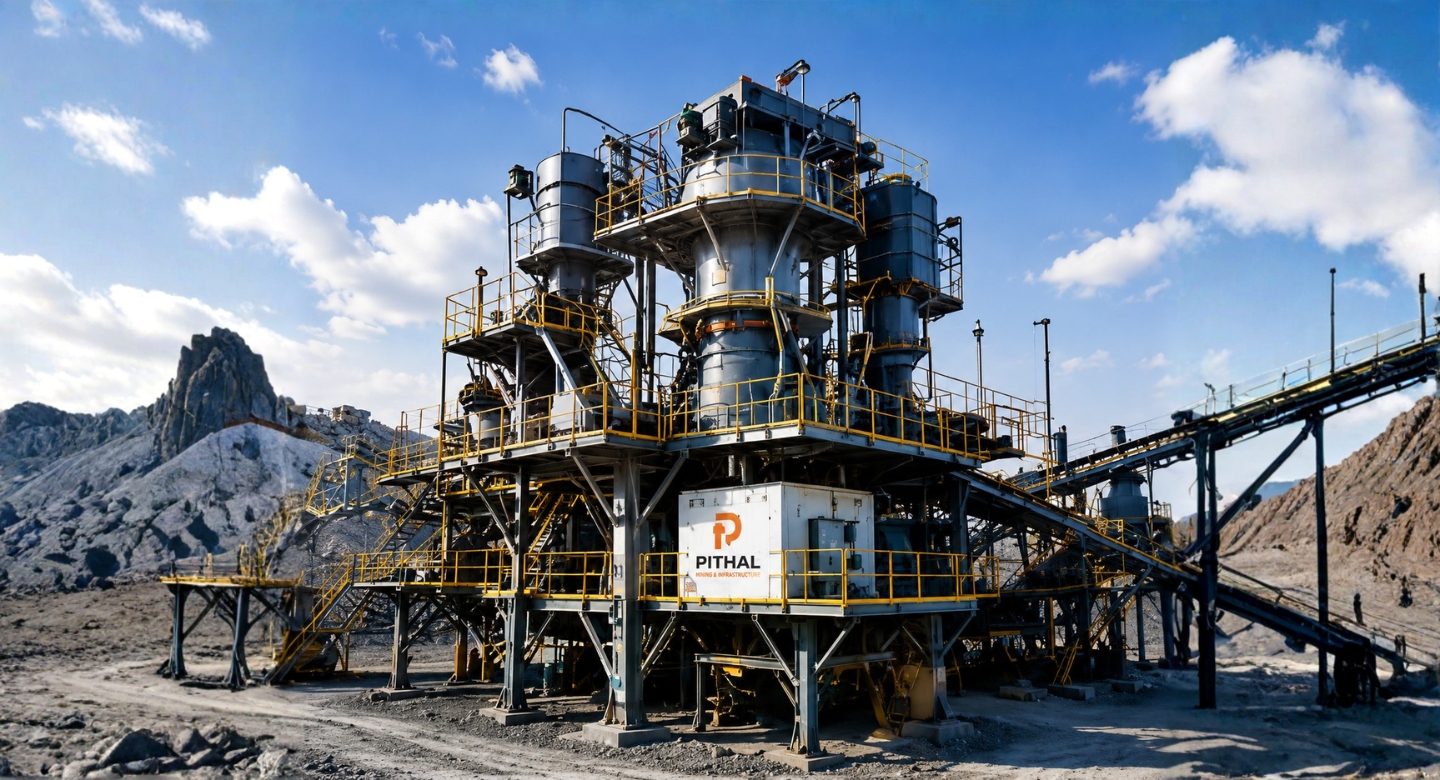
Before crushed stone can be used in road construction, large rocks must be processed into smaller and accurately sized aggregates. This process usually takes place in a stone crushing plant.
The production process generally involves primary crushing, secondary crushing and screening. Each stage helps transform raw material into aggregates suitable for different construction applications.
Primary Crushing
Primary crushing is the first stage of aggregate production. Large rocks extracted from quarries are fed into a primary crusher, commonly a jaw crusher.
A jaw crusher uses compressive force to break large rocks into smaller pieces. It is widely used for handling hard materials and preparing them for further processing.
Secondary Crushing
After primary crushing, the material is transferred to secondary crushing equipment. Depending on the rock type and required output, a cone crusher or impact crusher may be used.
This stage reduces the material further and helps produce the aggregate sizes needed for road construction. Additional crushing stages may be included when smaller sizes or specific particle shapes are required.
Screening and Aggregate Separation
Once crushing is completed, the material passes through vibrating screens. These machines separate crushed stone into different size fractions.
Screening helps aggregate producers maintain consistent product sizes for road base, sub-base, asphalt and concrete applications. Proper classification also allows different aggregate products to be supplied according to project requirements.
Importance of Choosing the Right Stone Crushing Equipment
The quality of road construction aggregates depends greatly on the equipment used during production. A properly designed crushing plant helps process raw rocks efficiently while maintaining better control over the final product.
Jaw crushers are commonly used for primary crushing, while cone crushers and impact crushers are selected for further material reduction depending on the application. Vibrating screens separate the finished aggregates into required sizes.
The selection of equipment depends on several factors, including the hardness of the raw material, required production capacity, desired aggregate size and final application.
Reliable stone crushing machinery can help aggregate producers improve production efficiency, maintain consistent output and reduce unnecessary material reprocessing.
How Pithal Machines Support Aggregate Production
With increasing infrastructure development, the demand for quality crushed stone and construction aggregates continues to grow. Road contractors and aggregate producers need efficient equipment to process raw materials and meet different project requirements.
Pithal Machines focuses on crushing and material processing solutions that support aggregate production for construction and infrastructure applications.
From primary crushing to secondary material reduction and screening, every stage plays an important role in producing suitable road construction aggregates. Selecting the right machinery helps producers achieve better control over material size, processing efficiency and production requirements.
For businesses involved in quarrying and aggregate manufacturing, choosing suitable crushing equipment is an important step towards maintaining consistent production and meeting the growing demand for construction materials.
Conclusion
Crushed stone is a fundamental material in road construction. It is used in sub-base layers, road base courses, asphalt mixtures, concrete pavements and drainage systems. Its strength, angular shape and durability make it suitable for building stable road structures that can support heavy traffic.
However, the quality of the finished road depends on more than just the quantity of stone used. Aggregate size, gradation, shape and strength all influence pavement performance and durability.
This makes efficient crushing and screening equipment essential for modern aggregate production. From jaw crushers and cone crushers to vibrating screens, every machine contributes to converting raw rocks into useful construction materials.
As infrastructure development continues to expand, the demand for high-quality road construction aggregates will remain strong. Pithal Machines supports efficient material processing with crushing solutions designed to help aggregate producers meet the requirements of modern road and infrastructure projects.