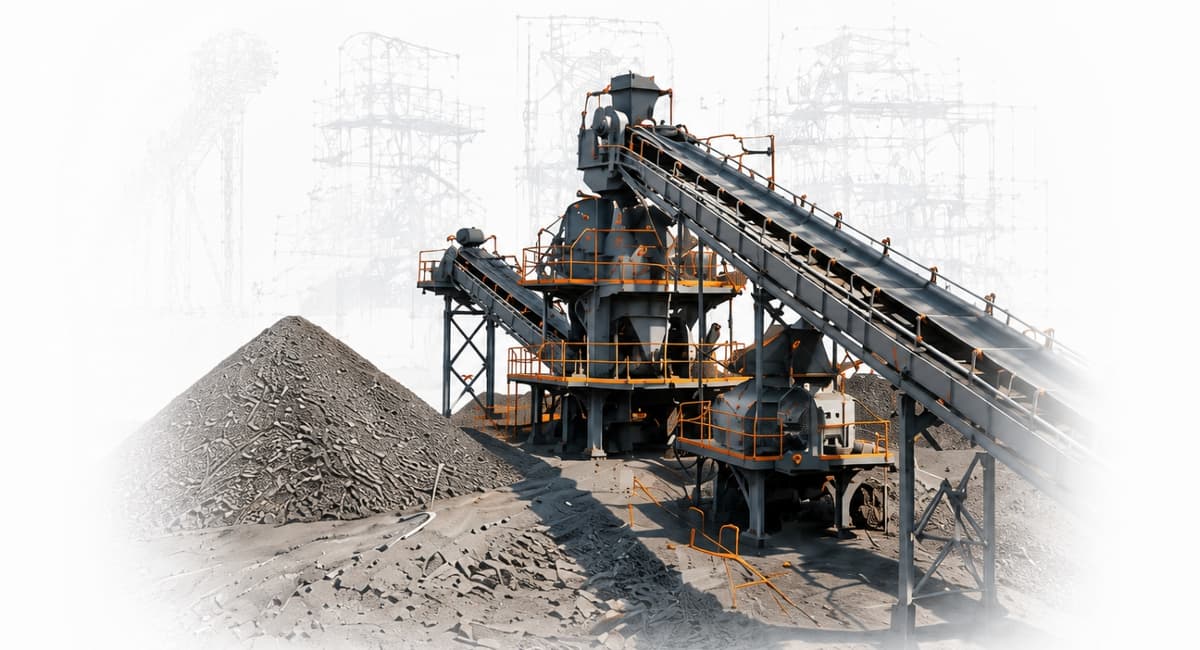
Construction and demolition projects often generate large quantities of concrete, rock, brick and other materials that need to be processed or moved. Transporting this material to a separate crushing facility can add extra handling, hauling and logistical requirements to a project.
A crusher bucket for excavators offers a more flexible approach by bringing crushing directly to the jobsite. Mounted on a compatible excavator, it can process suitable materials close to where they are excavated, demolished or collected. The processed material can then be reused, stockpiled or moved for further processing, depending on project requirements.
For contractors involved in construction, demolition, roadwork, excavation and recycling, an excavator-mounted crusher can make material processing more integrated and mobile.
But how does a crusher bucket work, where can it be used, and what should you consider before choosing one? This guide covers the uses, benefits and applications of crusher buckets for excavators, along with the key factors that influence their performance.
What Is a Crusher Bucket for Excavators?
A crusher bucket for excavators is a crushing attachment designed to reduce suitable materials into smaller, more manageable sizes directly at the worksite. It is mounted to an excavator using the machine's attachment system and uses the excavator's hydraulic power to operate its crushing mechanism.
Unlike a conventional crushing setup that may require a dedicated crusher and supporting equipment, a bucket crusher for excavator combines crushing capability with the mobility of the excavator.
This makes the attachment useful when material needs to be processed at different locations or when establishing a complete crushing plant is not practical for the project.
Depending on its design and application, a crusher bucket can process materials such as concrete, masonry, bricks and certain types of natural stone. Material suitability should always be confirmed according to the manufacturer's specifications.
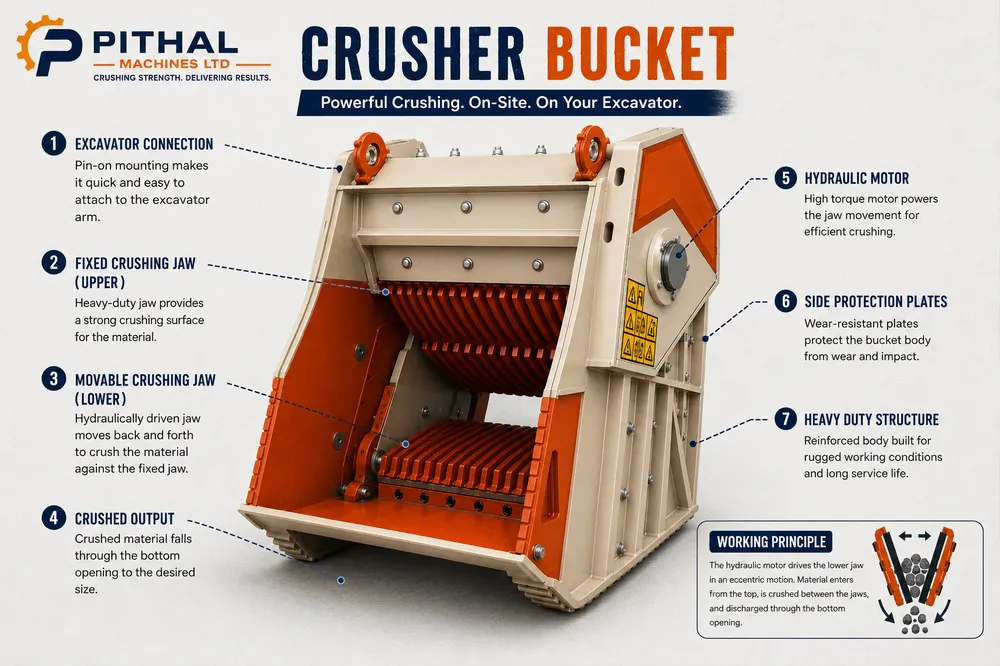
How Does a Bucket Crusher Work?
The working principle of an excavator crusher is based on mechanically breaking suitable material into smaller pieces.
The excavator loads material into the crusher bucket. Once the attachment is positioned and activated, hydraulic power from the carrier excavator operates the crushing mechanism. The material is subjected to crushing forces until it reaches the required or achievable size before being discharged.
The process can be summarized as:
Collect material → Load the crusher bucket → Crush the material → Discharge processed material → Reuse or stockpile
What Materials Can a Crusher Bucket Crush?
One of the most common questions about a crusher bucket is what materials it can process.
The answer depends on the specific crusher design but suitable applications can include:
Concrete
Demolished concrete can be reduced into smaller pieces for potential reuse as aggregate or fill, depending on the project's technical requirements.
Bricks and Masonry
Brick and masonry waste from construction, renovation or demolition projects can be processed using a suitable bucket crusher.
Natural Stone
Certain types of natural stone and rock can be crushed where the attachment is designed to handle their characteristics.
Construction and Demolition Materials
Suitable mineral-based construction and demolition materials can be processed after unwanted materials have been separated.
However, a crusher bucket is not designed to process every type of waste. Large metal components, timber, organic materials and heavily contaminated material may require separation or pre-processing before crushing.
Feed size is also important. Material that exceeds the attachment's recommended feed size can affect productivity and increase wear on crushing components.
Major Benefits of Using a Crusher Bucket
The main advantage of a bucket crusher for excavator is its ability to bring material processing closer to the source. This can change how contractors manage material across a jobsite.
On-Site Crushing
Instead of transporting every load of suitable material to a separate crushing location, contractors can process it closer to where it is generated.
For demolition projects, for example, concrete can potentially be crushed near the demolition area. On excavation projects, suitable material can be processed without establishing an entirely separate crushing setup.
Reduced Material Transportation
Moving heavy material multiple times can add significant logistical requirements to a project.
On-site crushing can reduce the distance suitable material needs to travel before processing or reuse. This may reduce handling and transportation steps, although the actual benefit depends on material volume, hauling distance, site layout and project duration.
Better Material Reuse
A crusher bucket can support a more efficient approach to construction material management.
Instead of immediately treating suitable concrete, brick or stone as waste, contractors can process it and potentially reuse the resulting material for applications such as backfilling, temporary access roads or site preparation, where permitted and technically suitable.
Greater Excavator Versatility
An excavator is already used for digging, loading, lifting and material handling. Adding a compatible crusher attachment can expand the range of work the machine can perform.
An excavator with crusher capability can therefore give contractors greater flexibility from equipment already operating on the project.
Mobility Between Work Areas
A major advantage of an excavator-mounted crusher is mobility.
Rather than moving material to a fixed crushing location, the attachment can move with the excavator. This can be particularly useful on infrastructure, demolition and site-development projects where material-processing requirements change from one work area to another.
Crusher Bucket Applications
The versatility of a crusher bucket for excavators makes it suitable for a range of industries and jobsite conditions.
Construction and Site Development
Construction projects generate concrete, masonry and other mineral-based materials during excavation, structural work and site preparation.
A bucket crusher can process suitable material at or near the worksite, potentially reducing the need to move it to an external processing facility.
Demolition and Concrete Recycling
Demolition is one of the most practical applications for an excavator crusher.
When structures are demolished, large quantities of concrete and masonry may need to be handled. Crushing suitable material near the demolition area can simplify material flow and support recycling-focused operations.
Road and Infrastructure Projects
Road construction, repair and infrastructure development often involve excavation and removal of existing material.
A crusher bucket can be useful when suitable rock, concrete or other mineral material needs to be processed close to the work area.
Quarrying and Stone Processing
For selected quarrying and stone-processing applications, a bucket crusher can provide localized crushing capability.
It can be useful where material needs to be processed at different locations rather than continuously through a fixed, high-capacity crushing line.
Excavation and Earthmoving
Excavation projects can generate material that needs to be reduced or processed before reuse.
With the right material and equipment configuration, an excavator-mounted crusher can integrate material processing into the excavation workflow.
Landscaping and Site Preparation
Crushed stone and recycled mineral material can be used for paths, foundations, drainage and other site-development applications.
A crusher bucket can provide a way to process suitable material closer to where it is required.
Crusher Bucket vs Traditional Crushing Plant
What Affects Crusher Bucket Performance?
Buying a crusher bucket is only part of achieving good crushing performance. Equipment compatibility, material preparation, operating technique and maintenance all influence results.
Material Characteristics
Material hardness, size and composition can influence crushing performance. The material should be suitable for the attachment and remain within its specified operating limits.
Material Contamination
Construction and demolition material can contain unwanted items such as metal, timber, plastic or other debris.
These materials may need to be removed before crushing. Separating contaminants can help protect crushing components and improve the quality of the processed material.
Feed Size
Oversized material can affect productivity and place unnecessary stress on crushing components. Feed material should remain within the manufacturer's recommended limits.
Excavator Compatibility
The excavator needs to provide the hydraulic flow and pressure required by the attachment. Operating weight, lifting capability and attachment configuration should also be considered.
Required Output Size
The desired final material size influences how the crushing process should be configured and whether additional screening or processing is required.
Wear Component Condition
Crusher components are exposed to continuous impact and abrasion. Regular inspection and timely replacement of worn parts can help maintain consistent performance.
Operator Technique
Loading the attachment correctly, avoiding unsuitable material and operating within recommended parameters can contribute to efficient and reliable operation.
How to Choose the Right Crusher Bucket
Choosing a crusher bucket for excavators should begin with the project rather than the purchase price alone.
While crusher bucket price is an important consideration, the lowest initial price does not necessarily represent the best value. Excavator compatibility, material requirements, maintenance needs and long-term operating conditions should also be evaluated.
First, check whether the crusher bucket is compatible with the excavator you intend to use. Hydraulic requirements, operating weight and attachment configuration are essential considerations.
Next, identify the material you plan to process. A bucket designed for a particular application may not be suitable for every type of rock, concrete or demolition material.
You should also consider:
Maximum feed size
Required output size
Expected material volume
Excavator hydraulic capacity
Bucket capacity
Working environment
Maintenance requirements
Availability of wear parts
Manufacturer support
For contractors planning regular crushing work, it is also important to consider how frequently the attachment will be used and whether its capabilities match the expected workload.
A reliable crusher bucket manufacturer should provide clear technical specifications and guidance on carrier compatibility and intended applications.
Prime Crusher Bucket from Pithal Machine
For contractors looking to bring crushing directly to the jobsite, Prime Crusher Bucket by Pithal Machine is designed as an excavator-mounted crushing solution.
The concept is straightforward: instead of moving every load of suitable material to a separate crushing location, the crushing attachment travels with the excavator.
This approach can be useful for construction, demolition, excavation, recycling and other applications where suitable material needs to be processed locally.
Prime Crusher Bucket is part of Pithal Machine's range of crushing solutions, giving contractors an option to consider when mobility and on-site material processing are important factors.
Before selecting any crusher bucket, contractors should evaluate their excavator specifications, material type, expected workload and required output. Proper equipment matching is essential for safe and effective operation.
Ready to Bring Crushing to Your Jobsite?
If your project requires a more flexible approach to processing suitable concrete, stone, brick or other mineral-based material, explore Prime Crusher Bucket from Pithal Machine.
Designed for excavator-mounted applications, it provides contractors with an option for bringing crushing capability closer to where material is generated.
Explore the Prime Crusher Bucket and contact Pithal Machine to discuss your excavator compatibility, material type and project requirements.
Whether you are working in demolition, construction, road development, excavation or recycling, choosing the right crusher bucket starts with matching the attachment to the job.
Ready to discuss your crushing requirements? Get in touch with Pithal Machine and find out whether Prime Crusher Bucket is the right fit for your project.
Conclusion
A crusher bucket for excavators provides a practical way to bring crushing capability directly to the worksite. By combining an excavator's mobility with material-processing capability, contractors can handle suitable concrete, masonry, stone and other mineral-based materials closer to their source.
The benefits can include reduced material movement, greater equipment versatility, easier on-site processing and improved opportunities for material reuse. These advantages make bucket crushers for excavators particularly relevant to construction, demolition, roadwork, excavation, landscaping and recycling applications.
However, the right solution depends on the project. Material type, feed size, required output, excavator compatibility, contamination and expected workload should all be evaluated before selecting an attachment.
For contractors seeking a mobile crushing approach, Pithal Machine provides an excavator-mounted option to consider for on-site crushing requirements.
If you're ready to explore a more flexible way to process material on-site, take the next step with Pithal Machine. Explore Prime Crusher Bucket or contact the team to discuss your project and excavator requirements.