
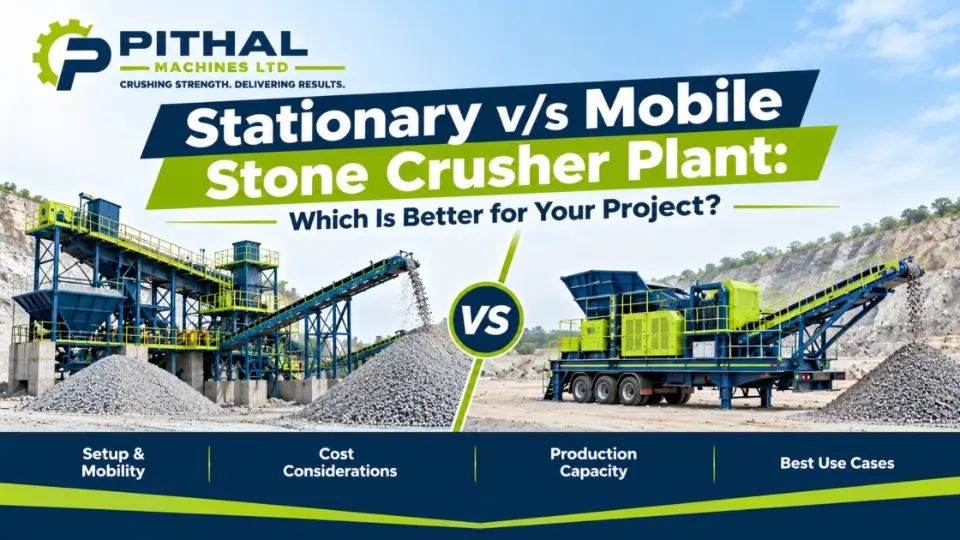
Setting up a stone crushing operation involves several decisions and choosing the right crusher plant is one of the most important. The equipment needs to match your production requirements, the type of stone you want to crush and the location where you plan to work.
For most businesses, the choice comes down to a mobile stone crusher plant or a stationary stone crusher plant. Both can produce quality aggregates but they are not meant for the same kind of work.
Think about a contractor working on a highway project. The crushing requirement may shift as construction moves forward. In this case, moving the crusher closer to the work area can be useful. A quarry that produces aggregates throughout the year has different needs. It may be better off with a fixed crushing setup.
Understanding these differences will help you avoid investing in equipment that does not suit your actual requirements.
What Is a Mobile Stone Crusher Plant?
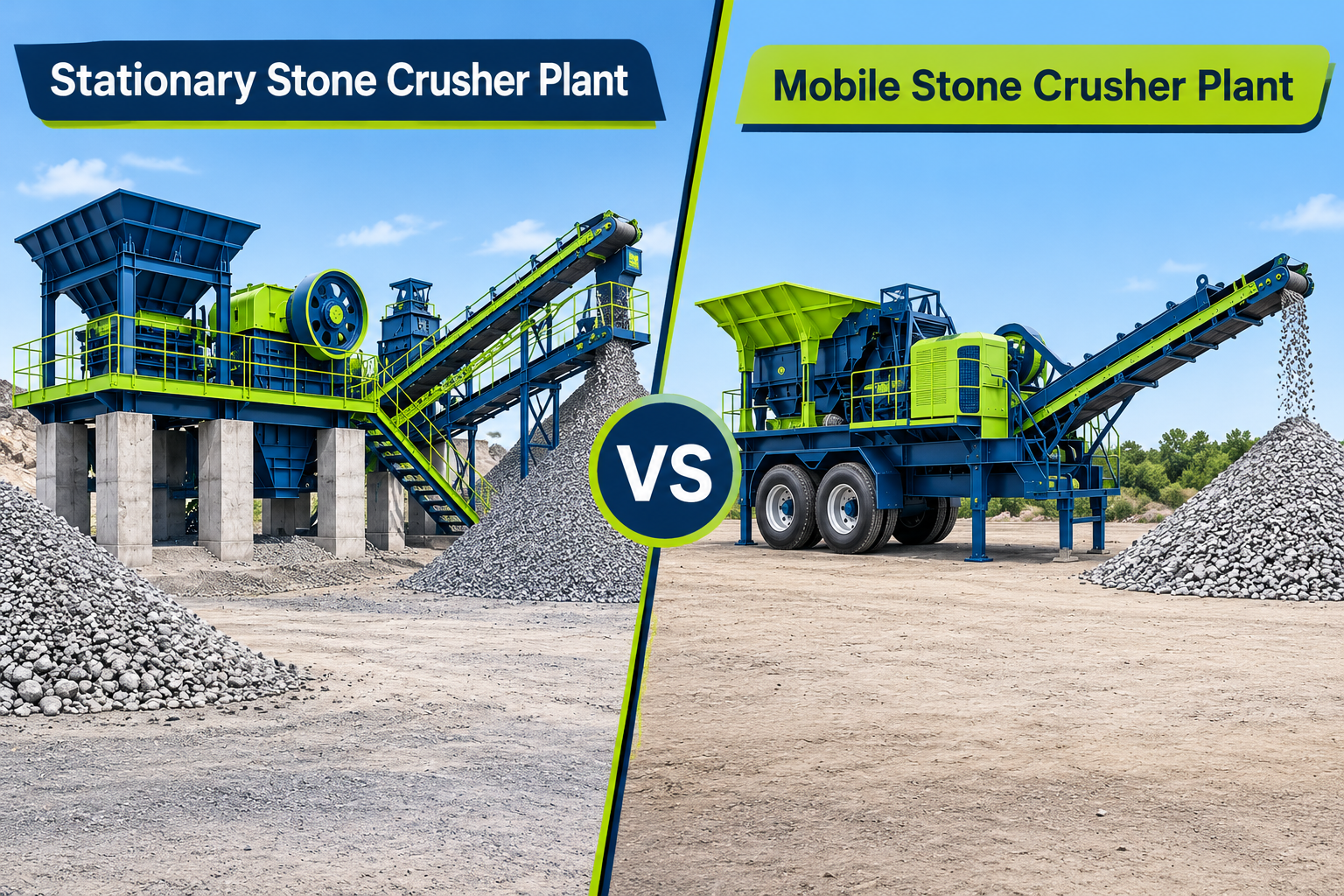
A mobile stone crusher plant is designed to crush stones at different locations. The equipment is mounted on tracks or wheels, making it easier to move between suitable sites.
Depending on the model, it can include a feeder, crusher, conveyor belt and screening unit. These components work together to break large rocks into smaller pieces and separate them into the required sizes.
The biggest reason businesses choose a mobile stone crusher plant is convenience. Instead of transporting all the raw stones to a fixed crushing facility, the machine can be taken closer to where the material is available.
This can be helpful for road construction, quarrying, mining projects and certain construction waste recycling operations. It is particularly useful for contractors who do not work at the same location throughout the year.
What Is a Stationary Stone Crusher Plant?
A stationary stone crusher plant is installed at one location and is designed for regular crushing operations. It is commonly found in permanent quarries and large aggregate production units.
A typical setup includes a vibrating feeder, jaw crusher, cone crusher or impact crusher, vibrating screens and belt conveyors. The arrangement depends on the type of stone being processed and the final aggregate sizes required.
For example, a quarry supplying crushed stone to construction companies may need several aggregate sizes. A stationary plant can be arranged with different crushing and screening stages to meet these requirements.
The initial installation takes more planning because the site needs enough space, foundations and supporting infrastructure. However, once everything is properly set up, the plant can handle regular production without the need for relocation.
Mobile vs Stationary Stone Crusher Plant: What Is the Difference?
The main difference is not in the work they perform but in how and where they operate.
Neither option is automatically better. The right choice depends on how often you need to move the equipment and how much material you plan to crush.
Why Do Businesses Choose a Mobile Stone Crusher Plant?
A mobile stone crusher plant offers flexibility, easy transportation and on-site crushing, making it suitable for projects that operate across different locations.
Easy to Move Between Work Sites
For contractors handling multiple projects, moving equipment can become a regular challenge. A mobile crushing plant makes this easier because it can be relocated when the work moves to another suitable site.
For example, during road construction, the requirement for crushed stone may change as the project progresses. Having the crusher closer to the active work area can make material handling more convenient.
Less Need for Permanent Construction
Setting up a stationary plant involves preparing the land, building foundations and arranging supporting structures.
A mobile plant may require less permanent construction, depending on its design. This can be useful when the project is temporary and investing in a fixed facility does not make practical sense.
The operating surface must still be stable and properly prepared to ensure safe working conditions.
Saves Time on Material Transportation
Transporting large rocks from an excavation area to a distant crushing facility takes time and fuel.
A mobile stone crusher can often be positioned closer to the source of the raw material. This reduces the distance trucks need to travel before crushing begins.
For projects where transportation is a major expense, this can make a noticeable difference. However, the cost of moving and operating the mobile equipment should also be included in the calculation.
Suitable for Different Applications
Mobile crushing equipment is not limited to one type of project. It can be used for road construction, contract crushing, quarry operations and suitable recycling work.
For businesses that regularly move between projects, having equipment that can follow the work is a practical advantage.
Why Do Businesses Choose a Stationary Stone Crusher Plant?
A stationary stone crusher plant is ideal for long-term projects that require consistent production, higher crushing capacity and a fixed processing setup.
Better for Regular Crushing Operations
A stationary plant makes sense when crushing work takes place at the same location every day. Since the equipment is installed in a fixed arrangement, the entire process can be planned around the movement of raw material.
This is one reason permanent quarries and aggregate suppliers often prefer stationary crushing systems.
Suitable for Large Production Requirements
Some businesses need to produce large quantities of aggregates to meet regular orders. A stationary plant can be designed with multiple crushing stages to handle these requirements.
For instance, large rocks can first pass through a jaw crusher. A cone crusher can reduce their size further, while vibrating screens separate the material into different grades.
The final output depends on the machine specifications, rock characteristics and overall plant arrangement.
Organised Material Handling
In a stationary crushing plant, conveyor belts carry material from one machine to another. This helps maintain a steady flow and reduces unnecessary movement of crushed stones.
For businesses that produce aggregates year-round, an efficient layout can make daily operations easier to manage.
Room for Future Expansion
Production requirements can increase as a business grows. A stationary plant may allow additional crushers, screens or conveyors to be installed later.
This depends on the original layout and available space. It is always better to consider future production needs before setting up the plant.
Which Plant Should You Choose for Your Project?
Your working conditions should guide the decision.
Road construction: A mobile stone crusher plant can be useful when the work moves between different locations.
Permanent quarries: A stationary plant is generally suitable for regular crushing at a fixed site.
Large aggregate production: A stationary setup may be preferable when you need a consistent supply of different aggregate sizes.
Contract crushing: Mobile equipment is useful for contractors working at multiple sites.
Construction waste recycling: A mobile plant can process suitable waste materials closer to the source, depending on its capabilities.
The important thing is to choose equipment based on the actual work rather than simply selecting the most expensive or highest-capacity machine.
What Should You Check Before Buying a Stone Crusher Plant?
Before investing, take a close look at the material you will be processing. Granite, basalt and limestone have different crushing characteristics. A machine that works well with one type of stone may not be the most suitable choice for another.
Production capacity is equally important. Calculate how many tonnes you need to crush per hour and check whether the equipment can meet that requirement under your actual working conditions.
You should also think about the final aggregate size. A jaw crusher is commonly used for primary crushing, while cone and impact crushers can be used for further size reduction depending on the application. Vibrating screens help separate the finished material into different sizes.
Apart from machine specifications, check the availability of power, spare parts and maintenance support. Site access, working space, dust control and noise requirements should also be considered.
These details may seem small during the buying process but they can make a big difference once the plant starts operating.
Why Choose Pithal Machines for Stone Crushing Equipment?
Every crushing project has different requirements. The type of stone, production target and final aggregate size all influence which equipment will work best.
Pithal Machines offers crushing and screening equipment, including jaw crushers, cone crushers, VSI crushers, bucket crushers, vibrating screens and complete crushing plant solutions.
Whether you are starting a new quarry or improving an existing crushing operation, choosing the right combination of machines is important. Understanding your production needs before purchasing can help you avoid unnecessary expenses and make better use of your equipment.
Planning a stone crushing project? Get in touch with Pithal Machines to discuss your requirements and explore suitable crushing equipment for your business.